



 Whitman Expo



Outside of the direct trading of coins, our industry has seen some shake up recently on the data and information front.
Thank you to our sponsors!
Go check them out!









Original Packaging: The five coins were sealed into a single pliofilm envelope with pockets for each coin, a sixth pocket containing an embossed and printed paper seal reading US MINT PHILADELPHIA in blue on a silver background. The set was protected from damage by two strips of cardstock, and all three pieces were inserted, along with a brief fact sheet, into a buff-colored mailing envelope. This carried a pre-printed return address and a discreet notation of its contents.
Commentary: As the speculative mania for Proof sets grew, alongside a general increase in the number of coin collectors, sales of Proof sets for 1956 nearly doubled in sales from the previous year. There was a great investment interest in these sets, and those who had ordered sets at $2.10 could sell “futures” at $2.50 or more, pending delivery.
The exclusive use of pliofilm packaging for this and subsequent Proof sets through 1964 led to a much higher survival rate in gem condition. Indeed, prices for top-grade certified Proofs are somewhat lower for this and later dates.
Also more abundant, though still not common, are cameo Proofs. The Mint produced some truly amazing, ultra cameo Proofs in 1956. While these represent the best of the best, coins having enough contrast to be certified simply as “cameo” are much more readily available than for earlier dates.
A small number of the Proof nickels dated 1956 were coined with a doubled-die obverse. This is evident as slight doubling in the motto IN GOD WE TRUST.
Another highly desirable variety for this date is the Proof half dollar having the old reverse used from 1950 to 1955. The original reverse hub for the Franklin half dollar featured an eagle that was not sharply rendered. This hub was replaced early in 1956 with one having a very distinctly sculpted eagle, and Proofs dated 1956 of the first variety are very scarce. These varieties may be distinguished fairly easily: the Type 1 reverse has a weak eagle with four narrow feathers visible to the left of its perch, while the Type 2 reverse shows a bold eagle having just three more prominent feathers to the left of the perch. Proofs of all subsequent dates have only this new reverse, though the coins made for circulation may be found with either reverse, since retired Proof dies were used to coin circulation pieces at the Philadelphia Mint.
Source: Whitman
Catalog Information
GSID:
10920
Fineness:
0.9
Precious Metal Weight:
0.6148 oz
Strike Type:
Proof
Edge:
Reeded
Variety:
Proof Set
Variety 2:
5 Coins
Coin Date:
1956
Denomination:
1c-50c
Designation:
PR
Mint Location:
Philadelphia
Mintage:
669,384
Coinage Type:
Proof Set
Coinage Years:
1936-
Composition:
Silver
PCGS #:
904765
Send Catalog Feedback
To: editor@greysheet.com
Subject: I would like to contribute catalog info to CDN for 1956 1c-50c Proof Set, 5 Coins PR
Body: Referring page: http://beta.greysheet.com/prices/item/1956-united-states-proof-set/gsid/10920 GSID: 10920 Title: 1956 1c-50c Proof Set, 5 Coins PR
Subscribe to View
View more data, info, and visualizations. Get access to retail and wholesale pricing as well as auction data.
Coin Value History
1956 1c-50c Proof Set, 5 Coins PR
Currency
Grade Range
Sort by
Pricing
Values
Greysheet & CPG® Values
1936 1c-50c Proof Set, Brilliant Finish, 5 Coins PR

Worth: $5,600 – $5,600
1936 1c-50c Proof Set, Satin Finish, 5 Coins PR

Worth: $5,200 – $5,200
1937 1c-50c Proof Set, 5 Coins PR

Worth: $2,365 – $2,365
1938 1c-50c Proof Set, 5 Coins PR

Worth: $980 – $980
1939 1c-50c Proof Set, Reverse of 1938 Nickel, 5 Coins PR

Worth: $920 – $920
1939 1c-50c Proof Set, Reverse of 1940 Nickel, 5 Coins PR

1940 1c-50c Proof Set, Reverse of 1940 Nickel, 5 Coins PR

Worth: $770 – $770
1940 1c-50c Proof Set, Reverse of 1938 Nickel, 5 Coins PR
1941 1c-50c Proof Set, 5 Coins PR

Worth: $735 – $735
1942 1c-50c Proof Set, 5 Coins PR

Worth: $700 – $700
1942 1c-50c Proof Set, 6 Coins PR

Worth: $800 – $800
1950 1c-50c Proof Set, 5 Coins PR

Worth: $625 – $625
1951 1c-50c Proof Set, 5 Coins PR

Worth: $500 – $500
1952 1c-50c Proof Set, 5 Coins PR

Worth: $235 – $235
1953 1c-50c Proof Set, 5 Coins PR

Worth: $195 – $195
Greysheet News
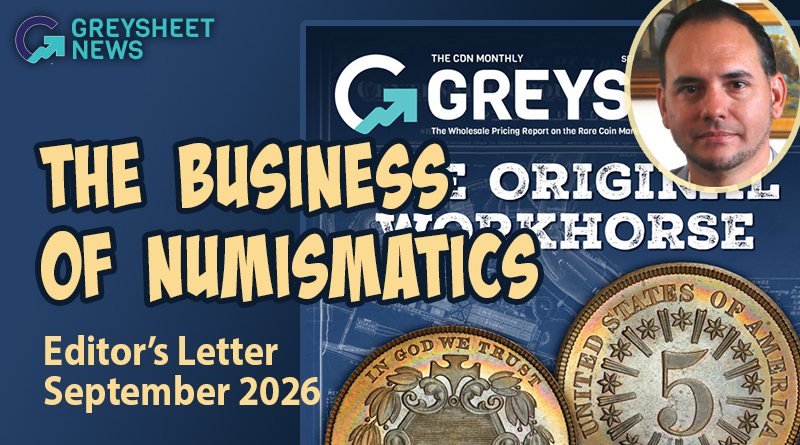
The Business of Numismatics: September 2026 Greysheet Editor's Letter
9/7/2026
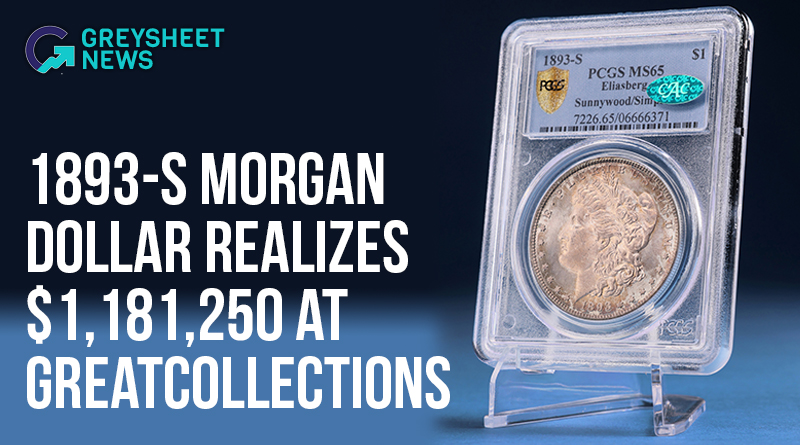
1893-S Morgan Dollar Realizes $1,181,250 at GreatCollections
Brings More Than 50% Over PCGS Price Guide — a Record for the Date in Gem Mint State.
9/4/2026
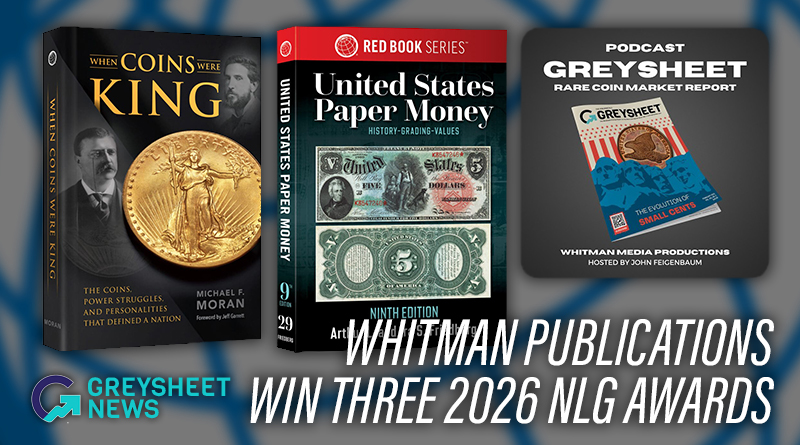
Whitman Publications Win Three 2026 NLG Awards
Whitman Brands walked away with a trio of honors during the annual Numismatic Literary Guild awards, held during the American Numismatic Association World's Fair of Money in Pittsburgh.
8/31/2026
Events
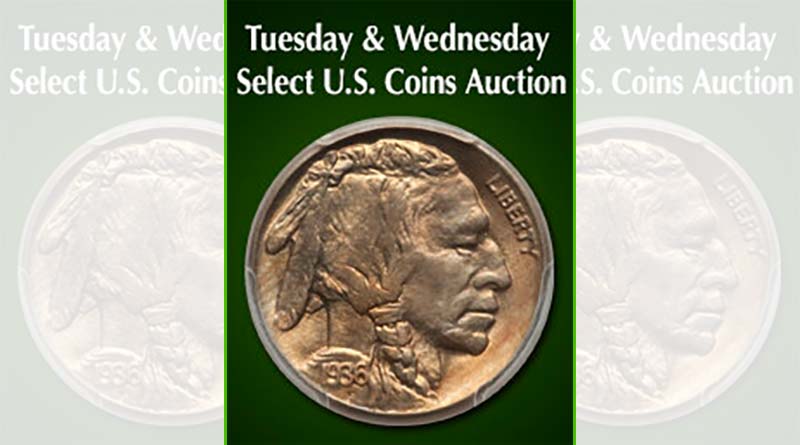
Heritage Auctions: US Coins Tuesday & Wednesday Select Auction
Location: Heritage Auctions
Wednesday, July 1, 2026
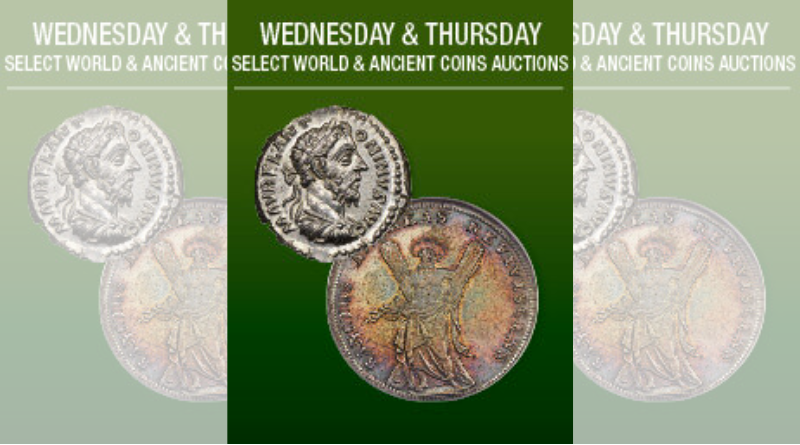
Heritage Auctions: World & Ancient Coins Wednesday & Thursday Select Auction
Location: Heritage Auctions
Thursday, July 2, 2026