



 Whitman Expo



Outside of the direct trading of coins, our industry has seen some shake up recently on the data and information front.
Thank you to our sponsors!
Go check them out!






Original Packaging: The 1955 sets were delivered with two highly distinctive types of packaging. Early orders were packaged in the traditional individual envelopes, as described for the 1954 sets. Most seen included polyethylene envelopes, though there are reports of the older style cellophane being used. In either instance, the stapled envelopes were wrapped in tissue paper for some measure of protection and sealed inside small cardboard boxes with postal tape. Across this tape, on the top of the box was rubber-stamped 1955 UNITED STATES PROOF COINS.
Midway through 1955, the U.S. Mint adopted a more sophisticated method of packaging and delivering Proof sets. The five coins were sealed into a single, soft plastic envelope with pockets for each coin, arranged in two rows. The coins could slide about within their respective pockets, but they could not touch one another. A sixth pocket held an embossed seal made of paper and having a metallic finish. This was octagonal and featured us mint philadelphia printed in blue on silver.
The Mint described its new plastic envelope as “pliofilm,” though it appears to be some form of polyethylene. Each set was protected from damage by two strips of cardstock, and all three pieces were inserted, along with a brief fact sheet, into a buff-colored mailing envelope with a preprinted return address for the Philadelphia Mint and a discreet notation of its contents. The recipient’s address could be marked on this envelope, but most customers ordered multiple sets, so a shipping box of corresponding size was used. This packaging was used through the Special Mint Set of 1965.
Commentary: Sales of Proof sets rose dramatically again this year, with the total exceeding that of 1954 by more than 50%. Speculation in Proof sets was growing, with most collectors now ordering more sets than they wanted for their own collections. They simply assumed that buying a few extra sets would pay off nicely in just a couple of years. For a while, at least, they were correct.
The 1955 Proof set was a winner in a couple of respects. For one thing, the half dollar was coined only at the Philadelphia Mint that year, and both the Proof and circulation pieces had attractively low mintages. For variety collectors, some of the sets included nickels having a tripled-die reverse, this being most evident in the word america. Though this variety was not noticed right away, it became a favorite of savvy collectors who, some years later, would go through set after set looking for it.
Like the cent of 1954, Philadelphia Mint nickels dated 1955 and coined for circulation are often seen a bit dark, as made. Again, this does not seem to have affected the Proof coinage, because greater care was taken in the selection of planchets.
Once again, an increase in mintage over 1954 led to a slightly greater availability of cameo and deep cameo Proofs. These coins also enjoy a higher survival rate in gem condition due to the introduction of soft pliofilm packaging.
Collectors are cautioned against an old fraud that was once commonplace with respect to these “flat-pack” Proof sets. A speculative fever developed during the late 1950s in sets that had never had their manila mailing envelopes opened. How this made the coins inside more desirable was never fully explained, but it prompted some dishonest persons to steam open these mailers, replace the coins with washers or slugs, and then reseal the envelopes. Quite a few of these gutted sets traded hands before curious owners could no longer stand the suspense and opened their sets to discover the fraud.
Source: Whitman
Catalog Information
GSID:
10968
Fineness:
0.9
Precious Metal Weight:
0.6148 oz
Strike Type:
Proof
Edge:
Reeded
Variety:
Proof Set
Variety 2:
Flat Packaging, 5 Coins
Coin Date:
1955
Denomination:
1c-50c
Designation:
PR
Mint Location:
Philadelphia
Mintage:
378,200
Coinage Type:
Proof Set
Coinage Years:
1936-
Composition:
Silver
PCGS #:
904764
Send Catalog Feedback
To: editor@greysheet.com
Subject: I would like to contribute catalog info to CDN for 1955 1c-50c Proof Set, Flat Packaging, 5 Coins PR
Body: Referring page: http://beta.greysheet.com/prices/item/1955-flat-united-states-proof-set/gsid/10968 GSID: 10968 Title: 1955 1c-50c Proof Set, Flat Packaging, 5 Coins PR
Subscribe to View
View more data, info, and visualizations. Get access to retail and wholesale pricing as well as auction data.
Coin Value History
1955 1c-50c Proof Set, Flat Packaging, 5 Coins PR
Currency
Grade Range
Sort by
Pricing
Values
Greysheet & CPG® Values
1936 1c-50c Proof Set, Brilliant Finish, 5 Coins PR

Worth: $5,600 – $5,600
1936 1c-50c Proof Set, Satin Finish, 5 Coins PR

Worth: $5,200 – $5,200
1937 1c-50c Proof Set, 5 Coins PR

Worth: $2,365 – $2,365
1938 1c-50c Proof Set, 5 Coins PR

Worth: $980 – $980
1939 1c-50c Proof Set, Reverse of 1938 Nickel, 5 Coins PR

Worth: $920 – $920
1939 1c-50c Proof Set, Reverse of 1940 Nickel, 5 Coins PR

1940 1c-50c Proof Set, Reverse of 1940 Nickel, 5 Coins PR

Worth: $770 – $770
1940 1c-50c Proof Set, Reverse of 1938 Nickel, 5 Coins PR
1941 1c-50c Proof Set, 5 Coins PR

Worth: $735 – $735
1942 1c-50c Proof Set, 5 Coins PR

Worth: $700 – $700
1942 1c-50c Proof Set, 6 Coins PR

Worth: $800 – $800
1950 1c-50c Proof Set, 5 Coins PR

Worth: $625 – $625
1951 1c-50c Proof Set, 5 Coins PR

Worth: $500 – $500
1952 1c-50c Proof Set, 5 Coins PR

Worth: $235 – $235
1953 1c-50c Proof Set, 5 Coins PR

Worth: $195 – $195
Greysheet News
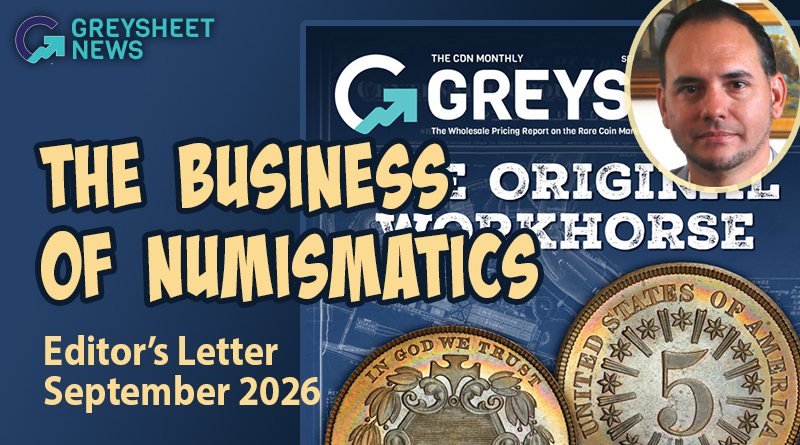
The Business of Numismatics: September 2026 Greysheet Editor's Letter
9/7/2026
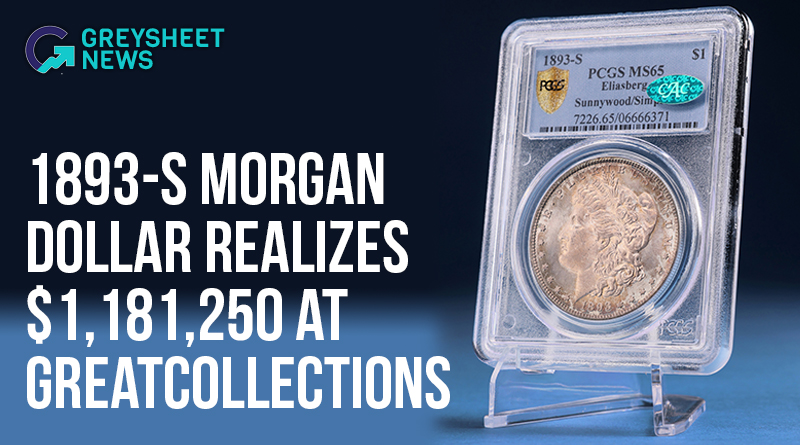
1893-S Morgan Dollar Realizes $1,181,250 at GreatCollections
Brings More Than 50% Over PCGS Price Guide — a Record for the Date in Gem Mint State.
9/4/2026
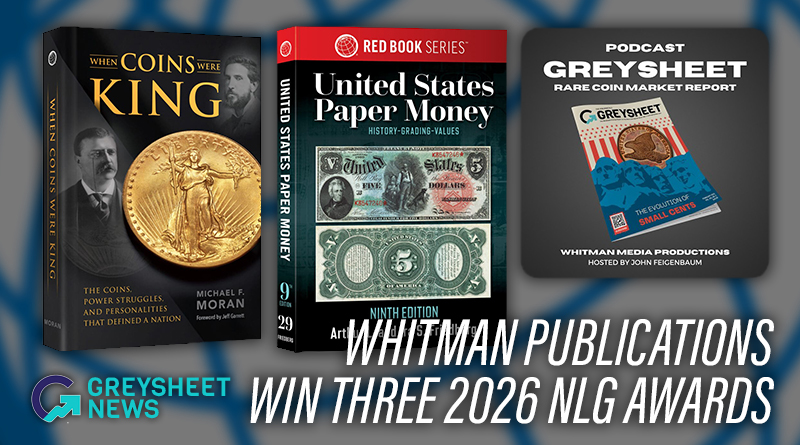
Whitman Publications Win Three 2026 NLG Awards
Whitman Brands walked away with a trio of honors during the annual Numismatic Literary Guild awards, held during the American Numismatic Association World's Fair of Money in Pittsburgh.
8/31/2026
Events
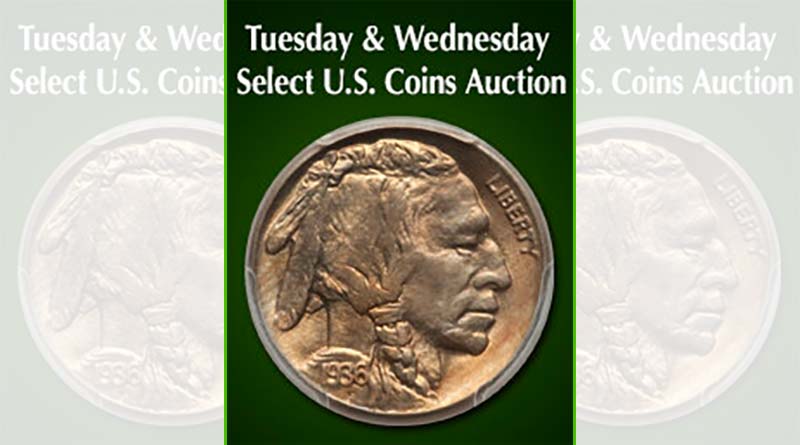
Heritage Auctions: US Coins Tuesday & Wednesday Select Auction
Location: Heritage Auctions
Wednesday, July 1, 2026
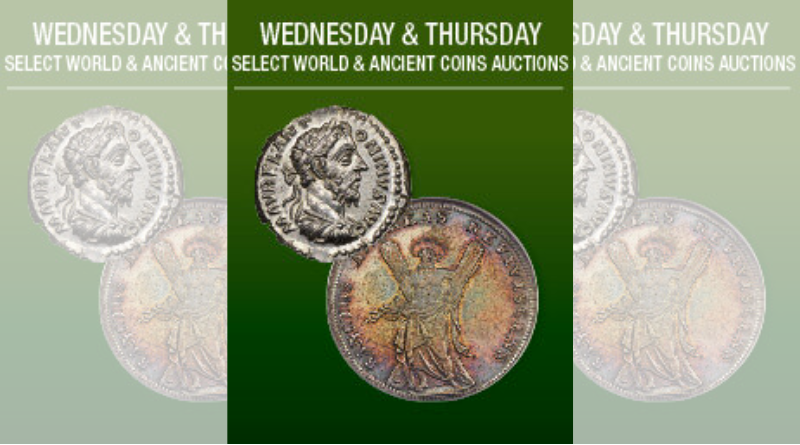
Heritage Auctions: World & Ancient Coins Wednesday & Thursday Select Auction
Location: Heritage Auctions
Thursday, July 2, 2026