



 Whitman Expo



Outside of the direct trading of coins, our industry has seen some shake up recently on the data and information front.
Thank you to our sponsors!
Go check them out!








Sales of Proof sets nearly doubled from 1953, and the Proofs of this date are indeed much more readily available than those of earlier years.
The change in packaging did cut down a bit on the tendency of Proof coins to suffer faint hairlines, but it also created a new problem. Proofs of this date stored in their original polyethylene envelopes, as well as 1955 Proofs in similar packaging, often show deep and unattractive toning. The combination of this plastic and the cardboard box could result in a somewhat purplish cast to the coins. Professional conservation is recommended for such pieces. Over the years, many have already been cleaned by their owners with mixed results.
The cents coined for circulation at the Philadelphia Mint in 1954 were often a bit dark, as made, but this doesn’t seem to have affected the Proof cents. Gem examples of all five denominations, while certainly not common, are available to collectors willing to pay market value. Cameo examples are somewhat more readily available for this date than for earlier ones, as the greater mintage prompted the use of more dies than previously. Because each die had a deep cameo finish when placed in the press for the first time, this created a greater pool of desirable Proofs. As always for pre-1970s Proofs, deep cameo examples remain rare.
Source: Whitman
Catalog Information
GSID:
10916
Fineness:
0.9
Precious Metal Weight:
0.6148 oz
Strike Type:
Proof
Edge:
Reeded
Variety:
Proof Set
Variety 2:
5 Coins
Coin Date:
1954
Denomination:
1c-50c
Designation:
PR
Mint Location:
Philadelphia
Mintage:
233,300
Coinage Type:
Proof Set
Coinage Years:
1936-
Composition:
Silver
PCGS #:
904762
Send Catalog Feedback
To: editor@greysheet.com
Subject: I would like to contribute catalog info to CDN for 1954 1c-50c Proof Set, 5 Coins PR
Body: Referring page: http://beta.greysheet.com/prices/item/1954-united-states-proof-set/gsid/10916 GSID: 10916 Title: 1954 1c-50c Proof Set, 5 Coins PR
Subscribe to View
View more data, info, and visualizations. Get access to retail and wholesale pricing as well as auction data.
Coin Value History
1954 1c-50c Proof Set, 5 Coins PR
Currency
Grade Range
Sort by
Pricing
Values
Greysheet & CPG® Values
1936 1c-50c Proof Set, Brilliant Finish, 5 Coins PR

Worth: $5,600 – $5,600
1936 1c-50c Proof Set, Satin Finish, 5 Coins PR

Worth: $5,200 – $5,200
1937 1c-50c Proof Set, 5 Coins PR

Worth: $2,365 – $2,365
1938 1c-50c Proof Set, 5 Coins PR

Worth: $980 – $980
1939 1c-50c Proof Set, Reverse of 1938 Nickel, 5 Coins PR

Worth: $920 – $920
1939 1c-50c Proof Set, Reverse of 1940 Nickel, 5 Coins PR

1940 1c-50c Proof Set, Reverse of 1940 Nickel, 5 Coins PR

Worth: $770 – $770
1940 1c-50c Proof Set, Reverse of 1938 Nickel, 5 Coins PR
1941 1c-50c Proof Set, 5 Coins PR

Worth: $735 – $735
1942 1c-50c Proof Set, 5 Coins PR

Worth: $700 – $700
1942 1c-50c Proof Set, 6 Coins PR

Worth: $800 – $800
1950 1c-50c Proof Set, 5 Coins PR

Worth: $625 – $625
1951 1c-50c Proof Set, 5 Coins PR

Worth: $500 – $500
1952 1c-50c Proof Set, 5 Coins PR

Worth: $235 – $235
1953 1c-50c Proof Set, 5 Coins PR

Worth: $195 – $195
1954 1C-50C Proof Set, Uncertified. This opened proof set is held within its Treasury-issued greenish-gray square box. The ...

$164
1954 Proof Set 1c-50c PCGS Proof 66-68

$400
1954 Proof Set PCGS Proof 66-67 (5 Coins)

$300
1954 Proof Set: PCGS PR65-67 (5 Coins)

$210
1954 1C-50C Proof Set, Uncertified. This opened proof set is held within its Treasury-issued greenish-gray square box. The ...

$170
1954 Proof Set 1c-50c PCGS Proof 66-68

$385
1954 Proof Set NGC Proof 67

$440
1954 1c -- 50c Proof Set PCGS Proof 67-68

$6,613
Greysheet News
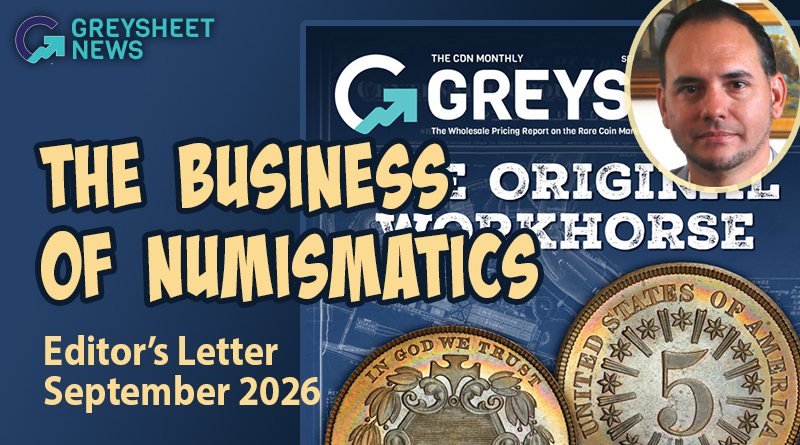
The Business of Numismatics: September 2026 Greysheet Editor's Letter
9/7/2026
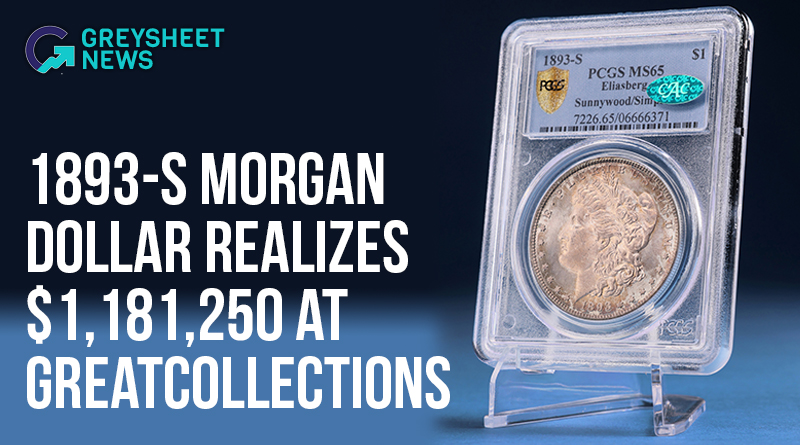
1893-S Morgan Dollar Realizes $1,181,250 at GreatCollections
Brings More Than 50% Over PCGS Price Guide — a Record for the Date in Gem Mint State.
9/4/2026
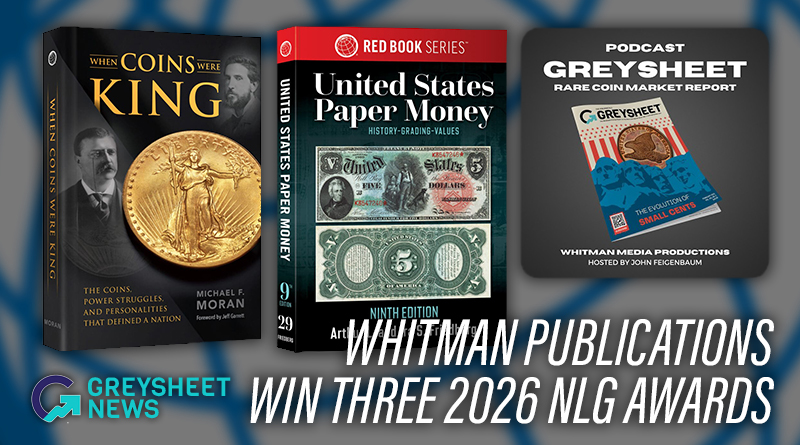
Whitman Publications Win Three 2026 NLG Awards
Whitman Brands walked away with a trio of honors during the annual Numismatic Literary Guild awards, held during the American Numismatic Association World's Fair of Money in Pittsburgh.
8/31/2026
Events
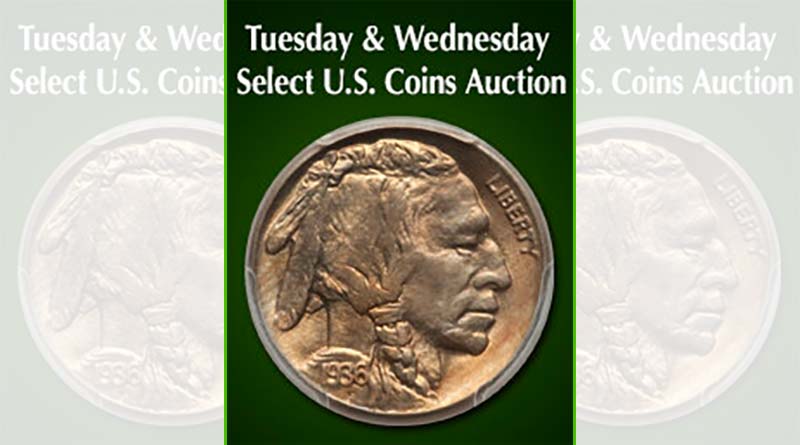
Heritage Auctions: US Coins Tuesday & Wednesday Select Auction
Location: Heritage Auctions
Wednesday, July 1, 2026
Heritage Auctions: World & Ancient Coins Wednesday & Thursday Select Auction
Location: Heritage Auctions
Thursday, July 2, 2026