



 Whitman Expo



Outside of the direct trading of coins, our industry has seen some shake up recently on the data and information front.
Thank you to our sponsors!
Go check them out!







From 1936 through the early 1970s, the normal finish for United States Proof coins is uniformly brilliant in fields and devices. Still, some coins may reveal the onset of satiny fields as a result of losing their polish. These coins have fine lines radiating from their centers toward their borders, a condition a later generation of Mint employees would describe as “starburst.” When these lines were discovered on a die’s face, the die would be removed from the press and repolished to a full brilliance. Though this removed some of the shallower details from the die, it did give the effect that collectors expected. Repeated polishing of the dies, with resulting loss of detail, was all too typical of Proofs dated 1936 to 1964.
One interesting variety found for 1952 is the so-called “Superbird” quarter. Proof dies were frequently cleaned after every couple dozen or so strikes, using alcohol and a soft cloth. Occasionally, a fiber from these cloths would remain on the die face or in one of its cavities, and an impression of this slim thread would be transferred to the coin at the moment of striking. In the case of the Superbird quarter, it is more likely that a wire bristle was the culprit, as the impression was made in the die and thus appears on each subsequent striking. This left a raised impression at the very center of the eagle’s breast on each coin struck from that reverse die. The short impression is curled into the shape of the letter S, and this evokes an image of Superman’s costume, with its bold S on his chest. A popular variety, this is just one of the many fun oddities associated with our Proof coinage.
Cameo Proofs of this date are quite scarce, with deep cameo pieces being genuinely rare. While these premium coins are most desired in high grades, even lesser specimens will bring good prices for their distinctive finish. Not being fully appreciated at the time, cameo Proofs were subject to the same mishandling and poor storage suffered by many ordinary Proofs produced before the Mint adopted hard plastic holders in 1966.
The idea for such holders may have resulted in part from initiative shown by the private sector. The marketing of rigid, screw-together holders of acrylic plastic began in 1945, and these holders became the item of choice for housing complete Proof sets during the 1950s and ’60s. Introduced just a few years later were snap-together holders made from polystyrene. While not as attractive, and offering less protection from abrasion, the styrene holders were also less expensive than acrylics.
Source: Whitman
Catalog Information
GSID:
10912
Fineness:
0.9
Precious Metal Weight:
0.6148 oz
Strike Type:
Proof
Edge:
Reeded
Variety:
Proof Set
Variety 2:
5 Coins
Coin Date:
1952
Denomination:
1c-50c
Designation:
PR
Mint Location:
Philadelphia
Mintage:
81,980
Coinage Type:
Proof Set
Coinage Years:
1936-
Composition:
Silver
PCGS #:
904760
Send Catalog Feedback
To: editor@greysheet.com
Subject: I would like to contribute catalog info to CDN for 1952 1c-50c Proof Set, 5 Coins PR
Body: Referring page: http://beta.greysheet.com/prices/item/1952-united-states-proof-set/gsid/10912 GSID: 10912 Title: 1952 1c-50c Proof Set, 5 Coins PR
Subscribe to View
View more data, info, and visualizations. Get access to retail and wholesale pricing as well as auction data.
Coin Value History
1952 1c-50c Proof Set, 5 Coins PR
Currency
Grade Range
Sort by
Pricing
Values
Greysheet & CPG® Values
1936 1c-50c Proof Set, Brilliant Finish, 5 Coins PR

Worth: $5,600 – $5,600
1936 1c-50c Proof Set, Satin Finish, 5 Coins PR

Worth: $5,200 – $5,200
1937 1c-50c Proof Set, 5 Coins PR

Worth: $2,365 – $2,365
1938 1c-50c Proof Set, 5 Coins PR

Worth: $980 – $980
1939 1c-50c Proof Set, Reverse of 1938 Nickel, 5 Coins PR

Worth: $920 – $920
1939 1c-50c Proof Set, Reverse of 1940 Nickel, 5 Coins PR

1940 1c-50c Proof Set, Reverse of 1940 Nickel, 5 Coins PR

Worth: $770 – $770
1940 1c-50c Proof Set, Reverse of 1938 Nickel, 5 Coins PR
1941 1c-50c Proof Set, 5 Coins PR

Worth: $735 – $735
1942 1c-50c Proof Set, 5 Coins PR

Worth: $700 – $700
1942 1c-50c Proof Set, 6 Coins PR

Worth: $800 – $800
1950 1c-50c Proof Set, 5 Coins PR

Worth: $625 – $625
1951 1c-50c Proof Set, 5 Coins PR

Worth: $500 – $500
1953 1c-50c Proof Set, 5 Coins PR

Worth: $195 – $195
1954 1c-50c Proof Set, 5 Coins PR

Worth: $110 – $110
1952 Proof Set 1c-50c PCGS Proof 66-67 (5 Coins)

$700
1952 Proof Set NGC Proof 64-68 (5 Coins)

$425
Five-Piece 1952 Proof Set PR67 to PR68 NGC. Individually Housed. This set will include the following: Cent PR67 Red;... (Total: 5 coins)

$720
Five-Piece 1952 Proof Set PR62 to PR65 NGC. Individually Housed. The Set Includes: Cent PR62 Red; Nickel PR65; Dime PR64; ... (Total: 5 item)

$162
Five Piece 1952 Proof Set PR65 to PR66 PCGS. This Set will Include: cent PR66 Red; nickel PR67; dime PR66; quarter PR65; and... (Total: 5 item)

$264
1952 Proof Set: PCGS PR64-67 (5 Coins)

$345
Greysheet News
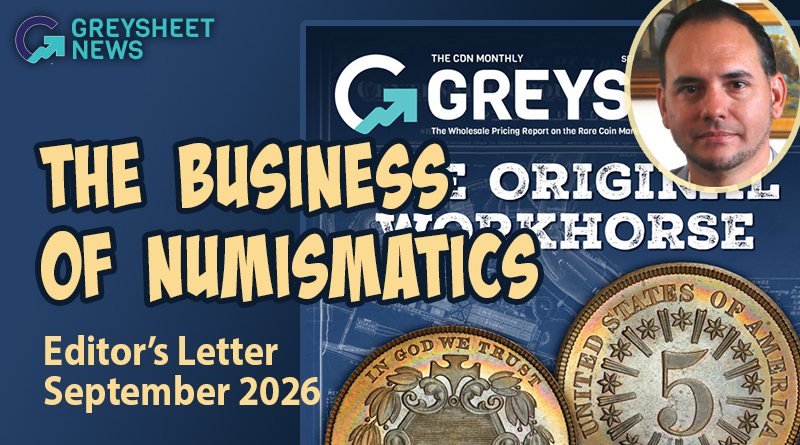
The Business of Numismatics: September 2026 Greysheet Editor's Letter
9/7/2026
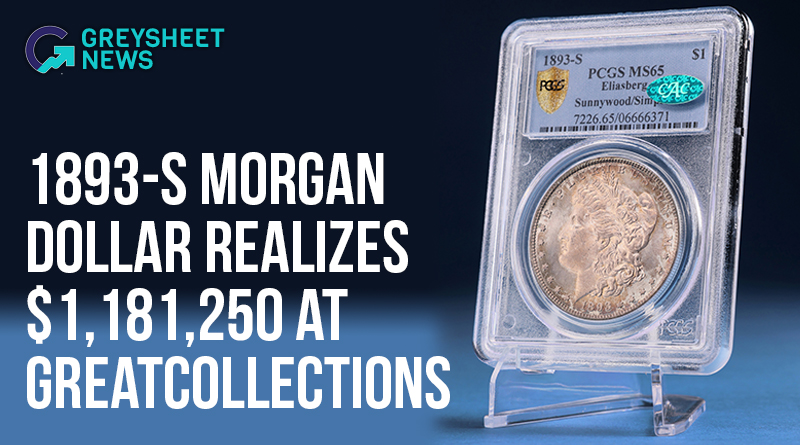
1893-S Morgan Dollar Realizes $1,181,250 at GreatCollections
Brings More Than 50% Over PCGS Price Guide — a Record for the Date in Gem Mint State.
9/4/2026
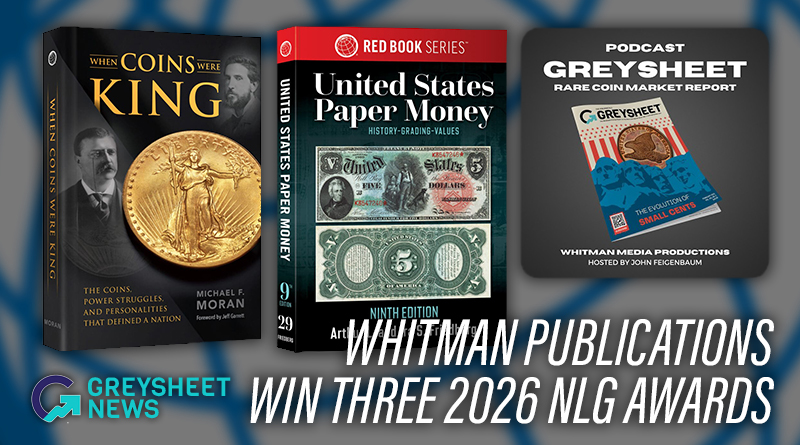
Whitman Publications Win Three 2026 NLG Awards
Whitman Brands walked away with a trio of honors during the annual Numismatic Literary Guild awards, held during the American Numismatic Association World's Fair of Money in Pittsburgh.
8/31/2026
Events
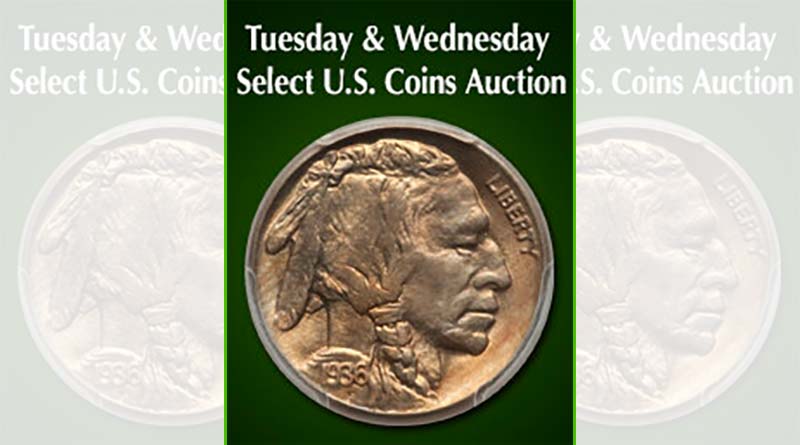
Heritage Auctions: US Coins Tuesday & Wednesday Select Auction
Location: Heritage Auctions
Wednesday, July 1, 2026
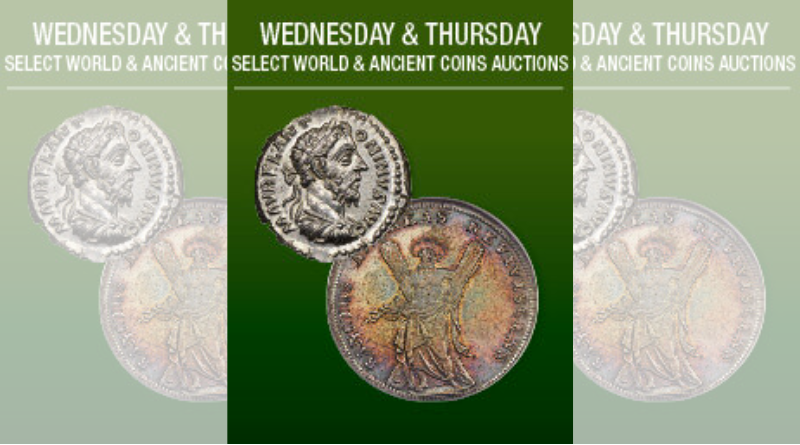
Heritage Auctions: World & Ancient Coins Wednesday & Thursday Select Auction
Location: Heritage Auctions
Thursday, July 2, 2026