



 Whitman Expo



Outside of the direct trading of coins, our industry has seen some shake up recently on the data and information front.
Thank you to our sponsors!
Go check them out!







1953 was the year that Proof set sales really took off, as a speculative market grew in the 1936 to 1942 sets and even the 1950 to 1952 sets. Already the 51,386 sets sold in 1950 made this date a modern rarity, at least in relative terms.
Despite a larger mintage, the Proof coins of 1953 are scarce as cameo pieces and very rare with deep or ultra cameo frosting. As with most Proofs from the 1950s and ’60s, it is the half dollar that is most in demand in gem cameo or deep cameo condition. Being the largest and heaviest coin in the set, it is the one most subject to suffering hairline scratches and abrasions. Proof quarters, once largely neglected, have recently become quite popular as a consequence of the state quarters program, which has increased interest in the Washington series across the board.
Cameo Proofs are certainly more readily available for coins dated 1950 and later than they are for the 1936 to 1942 issues, though they remain in the minority of Proof pieces minted through the early 1970s. During this period, the Mint took no special effort to preserve the frosty texture that the dies possessed when first placed into the coin press. Some 3,000 to 5,000 Proofs may have been made from each die before it was retired from Proof production, and this frost was quickly worn smooth through repeated striking of coins. Only the first few hundred Proofs from each die could be expected to show any frostiness. Perhaps only the first few dozen impressions would result in coins having deep or ultra cameo contrast, and these are consistently the most desired of Proofs among specialists.
Collectible varieties for 1953 include a doubled-die obverse cent with doubling quite visible in numerals “19” of the date. While not especially rare, this one is very popular. Somewhat scarcer, though still obtainable for any interested collector, is the 1953 nickel with die doubling in the motto IN GOD WE TRUST. This doubling is slight, and it will require a magnifying glass to see. A truly fascinating variety is the tripled-die obverse 1953 Proof quarter. It shows faint extra outlines to both sides of the date numerals.
Source: Whitman
Catalog Information
GSID:
10914
Fineness:
0.9
Precious Metal Weight:
0.6148 oz
Strike Type:
Proof
Edge:
Reeded
Variety:
Proof Set
Variety 2:
5 Coins
Coin Date:
1953
Denomination:
1c-50c
Designation:
PR
Mint Location:
Philadelphia
Mintage:
128,800
Coinage Type:
Proof Set
Coinage Years:
1936-
Composition:
Silver
PCGS #:
904761
Send Catalog Feedback
To: editor@greysheet.com
Subject: I would like to contribute catalog info to CDN for 1953 1c-50c Proof Set, 5 Coins PR
Body: Referring page: http://beta.greysheet.com/prices/item/1953-united-states-proof-set/gsid/10914 GSID: 10914 Title: 1953 1c-50c Proof Set, 5 Coins PR
Subscribe to View
View more data, info, and visualizations. Get access to retail and wholesale pricing as well as auction data.
Coin Value History
1953 1c-50c Proof Set, 5 Coins PR
Currency
Grade Range
Sort by
Pricing
Values
Greysheet & CPG® Values
1936 1c-50c Proof Set, Brilliant Finish, 5 Coins PR

Worth: $5,600 – $5,600
1936 1c-50c Proof Set, Satin Finish, 5 Coins PR

Worth: $5,200 – $5,200
1937 1c-50c Proof Set, 5 Coins PR

Worth: $2,365 – $2,365
1938 1c-50c Proof Set, 5 Coins PR

Worth: $980 – $980
1939 1c-50c Proof Set, Reverse of 1938 Nickel, 5 Coins PR

Worth: $920 – $920
1939 1c-50c Proof Set, Reverse of 1940 Nickel, 5 Coins PR

1940 1c-50c Proof Set, Reverse of 1940 Nickel, 5 Coins PR

Worth: $770 – $770
1940 1c-50c Proof Set, Reverse of 1938 Nickel, 5 Coins PR
1941 1c-50c Proof Set, 5 Coins PR

Worth: $735 – $735
1942 1c-50c Proof Set, 5 Coins PR

Worth: $700 – $700
1942 1c-50c Proof Set, 6 Coins PR

Worth: $800 – $800
1950 1c-50c Proof Set, 5 Coins PR

Worth: $625 – $625
1951 1c-50c Proof Set, 5 Coins PR

Worth: $500 – $500
1952 1c-50c Proof Set, 5 Coins PR

Worth: $235 – $235
1954 1c-50c Proof Set, 5 Coins PR

Worth: $110 – $110
1953 Proof Set 1c-50c NGC Proof 68 (5 Coins)

$1,625
1953 Proof Set PCGS Proof 65-68 (5 coins)

$390
1953 Proof Set NGC Proof 67 (5 Coins)

$360
1953 Proof Set NGC Proof 64-68 (5 Coins)

$250
1953 Proof Set NGC Proof 63-67 (5 Coins)

$230
1953 Proof Set NGC Proof 66-68 (5 Coins)

$550
Five-Piece 1953 Proof Set PR66 to PR69 NGC. Individually Housed. This set will include the following: Cent PR67 Red;... (Total: 5 coins)

$336
Five-Piece 1953 Proof Set PR65 to PR67 NGC. Individually Housed. This set will include the following: Cent PR66 Red;... (Total: 5 coins)

$312
Five-Piece 1953 Proof Set, PR63 - PR67 NGC. The set includes: cent PR65 Red; nickel PR65, dime PR66, quarter PR67, and hal... (Total: 5 item)

$147
1953 Proof Set NGC Proof 64-68 (5 Coins)

$325
1953 Proof Set NGC Proof 64-68 (5 Coins)

$270

$371
1953 Proof Set NGC Proof 65-68 (5 Coins)

$370
1953 Proof Set: PCGS PR64-67 (5 Coins)

$300
Five-Piece 1953 Proof Set PR66 to PR67 NGC. Individually Housed. This set will include the following: Cent PR66 Red; Nic... (Total: 5 item)

$336
Five-Piece 1953 Proof Set PR63 to PR67 NGC. Individually Housed. This set will include the following: Cent PR67 Red; Nic... (Total: 5 item)

$336
Greysheet News
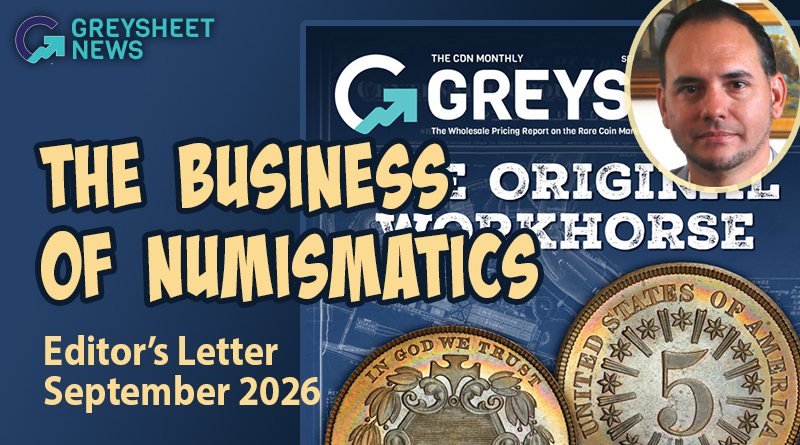
The Business of Numismatics: September 2026 Greysheet Editor's Letter
9/7/2026
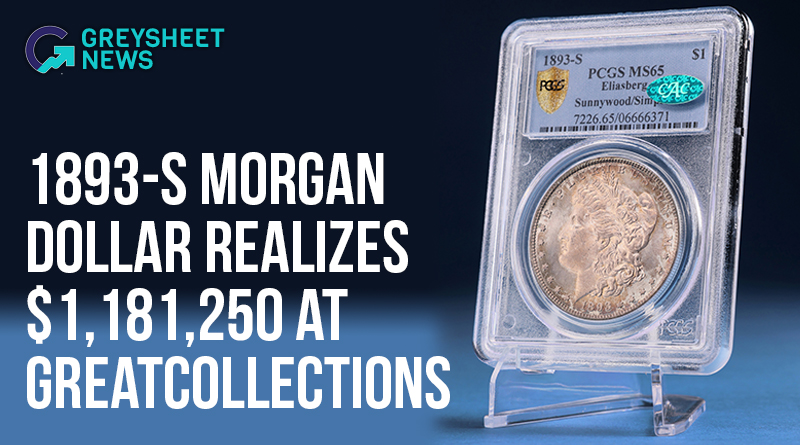
1893-S Morgan Dollar Realizes $1,181,250 at GreatCollections
Brings More Than 50% Over PCGS Price Guide — a Record for the Date in Gem Mint State.
9/4/2026
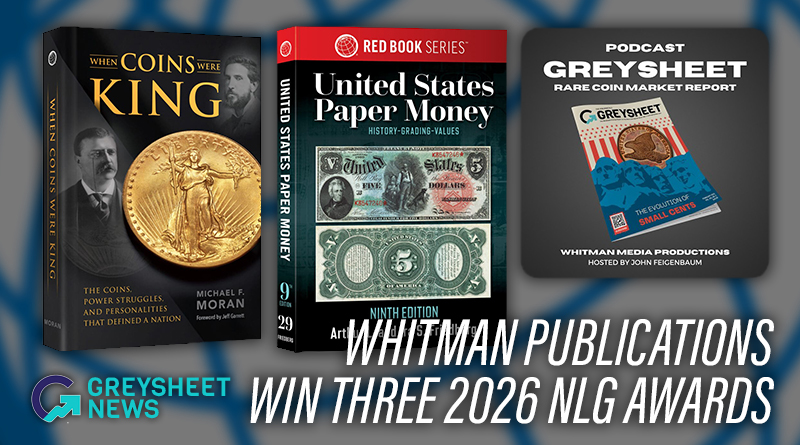
Whitman Publications Win Three 2026 NLG Awards
Whitman Brands walked away with a trio of honors during the annual Numismatic Literary Guild awards, held during the American Numismatic Association World's Fair of Money in Pittsburgh.
8/31/2026
Events
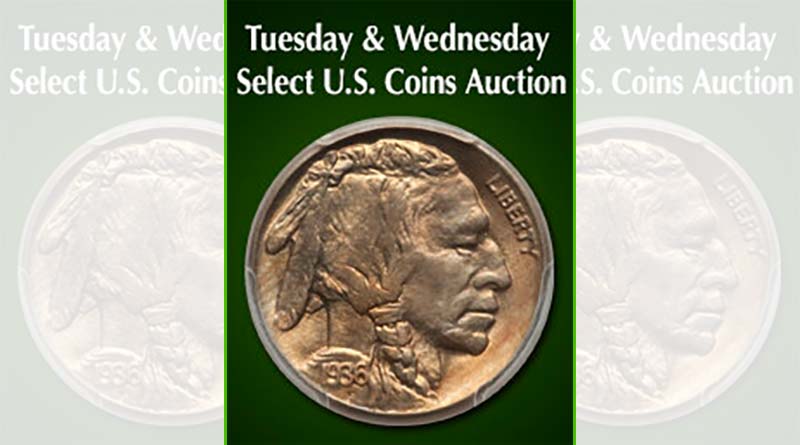
Heritage Auctions: US Coins Tuesday & Wednesday Select Auction
Location: Heritage Auctions
Wednesday, July 1, 2026
Heritage Auctions: World & Ancient Coins Wednesday & Thursday Select Auction
Location: Heritage Auctions
Thursday, July 2, 2026