




 Whitman Expo
-
Patterns (1922) Values
Greysheet & Red Book® PRICE GUIDE
Sort by
Sponsor
Sponsor
Sponsor

Sponsor

Sponsor

Legal Disclaimer
The prices listed in our database are intended to be used as an indication only. Users are strongly encouraged to seek multiple sources of pricing before making a final determination of value. CDN Publishing is not responsible for typographical or database-related errors. Your use of this site indicates full acceptance of these terms.
The Greysheet Catalog (GSID) of the Patterns (1922) series of Pattern Coinage in the U.S. Coins contains 5 distinct entries with CPG® values between $44,000.00 and $450,000.00.
History and Overview
Early in 1922, patterns were made of a medium-relief version of the Peace silver dollar, as the high-relief style employed in 1921 had caused problems in fully striking up the detail at the centers.11 Between January 5 and 23, coinage of 35,401 took place of the modified design—apparently a long run intended to test high-speed quantity production. Nearly all were melted. The only known specimen, authenticated by the Numismatic Guaranty Corporation of America (NGC) in 2001, is design-linked to the reverse of the 1922 Matte Proof high relief coins in the style of 1921 (in the Norweb Collection and others). The design modifications for the medium-relief patterns and the low-relief production coins were made by George T. Morgan with the knowledge of Mint Director Raymond T. Baker and independent artist James Earle Fraser, but the designer, Anthony deFrancisci, was not part of the change.
Trial production of low-relief issues for circulation began in late January. Those made for the first several weeks have slightly sharper obverse lettering than do the subsequent issues. The reverse also differs by the configuration of a gap between the olive branch and the eagle’s talon. After these had been made, on February 14, 1922, Fraser approved the low-relief design and permitted the coins to be released into circulation. They were subsequently made at all three mints—Philadelphia, Denver, and San Francisco. These are regular issues and today are easily obtainable in all grades, although the variety is not widely known.
Trial strikings were made of the 1922 Grant Centennial commemorative gold dollar. It is not known if these are of the without-star or the with-star variety.
See More See Less


 Loading more ...
Legal Disclaimer
The prices listed in our database are intended to be used as an indication only. Users are strongly encouraged to seek multiple sources of pricing before making a final determination of value. CDN Publishing is not responsible for typographical or database-related errors. Your use of this site indicates full acceptance of these terms.
Available on Greysheet Marketplace
View All
Auction Ends: 9/2/2026
Auction Ends: 9/4/2026
Auction Ends: 9/5/2026
Auction Ends: 9/2/2026
Dealer Directory
View All Dealers



Greysheet News
View All News
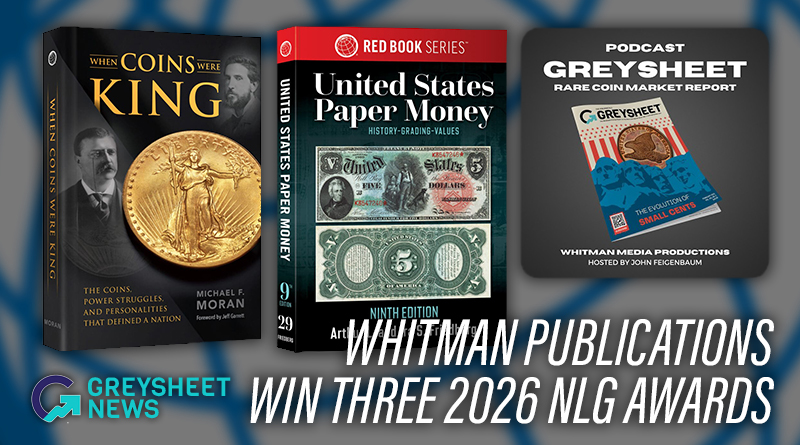
Whitman Brands walked away with a trio of honors during the annual Numismatic Literary Guild awards, held during the American Numismatic Association World's Fair of Money in Pittsburgh.

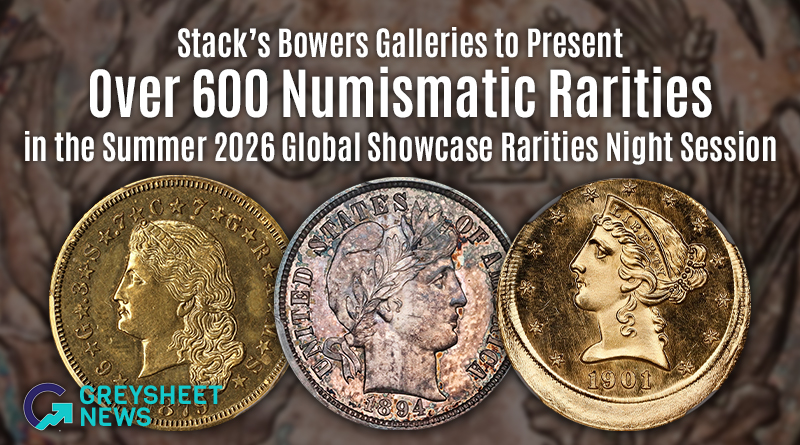
Rarities across the spectrum of American coinage are set to cross the auction block.
eBay, one of the world's largest marketplaces for unique and historic coins, today announced the expansion of Authenticity Guarantee in the U.S. to a new category: collectible coins.
Events
View All Events

Heritage Auctions

Wednesday, July 1, 2026
Thursday, July 2, 2026
DAVID LAWRENCE RARE COINS
Sunday, July 5, 2026