




 Whitman Expo
-
Patterns (1804) Values
Greysheet & Red Book® PRICE GUIDE


Sort by
Sponsor
Sponsor
Sponsor
Sponsor

Sponsor

Legal Disclaimer
The prices listed in our database are intended to be used as an indication only. Users are strongly encouraged to seek multiple sources of pricing before making a final determination of value. CDN Publishing is not responsible for typographical or database-related errors. Your use of this site indicates full acceptance of these terms.
The Greysheet Catalog (GSID) of the Patterns (1804) series of Pattern Coinage in the U.S. Coins contains 9 distinct entries with CPG® values between $400,000.00 and $600,000.00.
History and Overview
True pattern coins and trial strikes of 1804 may or may not have been struck. No record of them exists today. In the regular series, the year 1804 achieved its own measure of fame from two factors: the copper cent (being the scarcest 19th-century date of the denomination), and the 1804-dated silver dollar, now popularly known as “The King of American Coins” (made in several varieties, first struck in 1834 but from new dies dated 1804).
In the early 1800s, there was little or no numismatic interest in the United States coinage series, and not even the Mint preserved specimens of its own products. Thus, the various pieces regularly struck during this era slipped into circulation, these being the denominations of the half cent, cent, dime, quarter dollar, $2.50, $5, and $10.
Any die trials that were made were probably of copper and were defaced or melted after examination.
In 1834, the Mint desired to present as diplomatic gifts a number of sets reflecting current (1834) coinage as well as two other denominations no longer being struck in 1834, but believed to have last been struck in 1804, these being the silver dollar and gold $10. Appropriate dies were not on hand, and new dies were created for the $1 and $10, differing from the originals in several stylistic aspects including more modem numerals and plain (rather than crosslet) style 4, a beaded border, and certain other more modern characteristics. The quantity struck is not recorded, but was probably very small. Today eight related 1804 silver dollars are known, and four 1804 gold $10 pieces are known (J-33), suggesting that at least a few other 1804 $10 pieces may have existed at one time. These $10 coins have a brilliant Proof finish quite unlike originals. Examples are highly priced and are cherished for what they are, novodels made not for numismatic purposes, but for diplomatic presentation purposes and thus of great historical importance.
The so-called “restrike,” sometimes incorrectly called the “Mint restrike,” of the 1804 cent is a private production utilizing rusted dies discarded as old iron by the Mint. The obverse was originally used to coin 1803 cents, but was altered in the 1860s to read 1804. The reverse is a cent die of a later date and type.3
Collecting Perspective
The several pieces listed as patterns for this year all have special stories and fall into the category of private restrikes from mismatched dies or, in the case of the $10, a later striking from dies bearing an earlier date.
The 1804 $10 strikings have a market demand from specialists in gold coins as well as from pattern enthusiasts.
See More See Less


 Loading more ...
Legal Disclaimer
The prices listed in our database are intended to be used as an indication only. Users are strongly encouraged to seek multiple sources of pricing before making a final determination of value. CDN Publishing is not responsible for typographical or database-related errors. Your use of this site indicates full acceptance of these terms.
Available on Greysheet Marketplace
View All

Buy Now: $3,750.00

Buy Now: $8,950.00

Buy Now: $26,500.00

Buy Now: $295.00
Dealer Directory
View All Dealers


Greysheet News
View All News
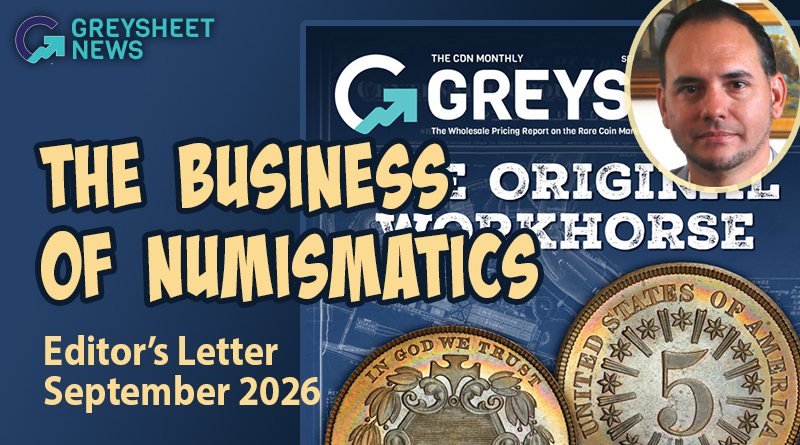
Outside of the direct trading of coins, our industry has seen some shake up recently on the data and information front.

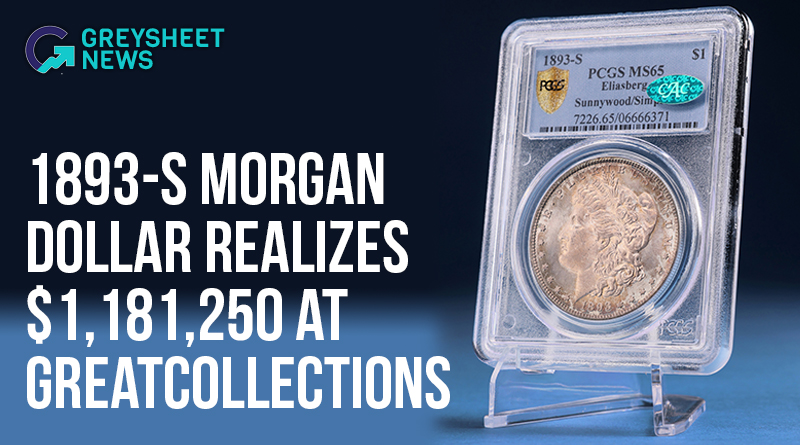
Brings More Than 50% Over PCGS Price Guide — a Record for the Date in Gem Mint State.
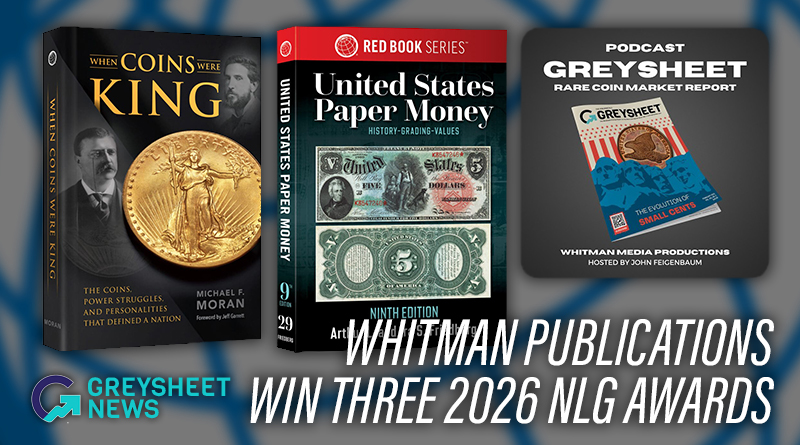
Whitman Brands walked away with a trio of honors during the annual Numismatic Literary Guild awards, held during the American Numismatic Association World's Fair of Money in Pittsburgh.
Events
View All Events

Heritage Auctions

Wednesday, July 1, 2026
Thursday, July 2, 2026
DAVID LAWRENCE RARE COINS
Sunday, July 5, 2026