




 Whitman Expo
-
Patterns (1879) Values
Greysheet & Red Book® PRICE GUIDE


Sort by
Sponsor

Sponsor

Sponsor

Sponsor

Sponsor

Legal Disclaimer
The prices listed in our database are intended to be used as an indication only. Users are strongly encouraged to seek multiple sources of pricing before making a final determination of value. CDN Publishing is not responsible for typographical or database-related errors. Your use of this site indicates full acceptance of these terms.
The Greysheet Catalog (GSID) of the Patterns (1879) series of Pattern Coinage in the U.S. Coins contains 154 distinct entries with CPG® values between $1,000.00 and $2,150,000.00.
A panorama of patterns was produced in 1879, highlighted by the misnamed
“Washlady” silver denominations, the elegant “Schoolgirl” silver dollar, and
the $4 gold Stellas in two styles.
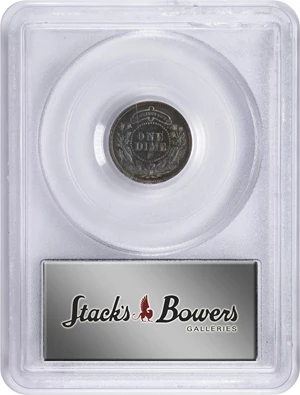
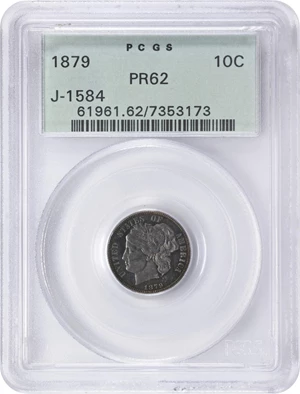
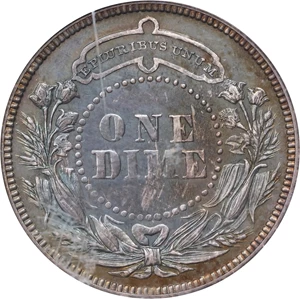
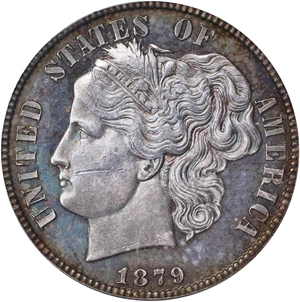
Assistant engraver Charles E. Barber’s suite of silver patterns of the dime,
quarter dollar, half dollar, and dollar denominations stands today as among
his finest work. In the late 19th century, this depiction of Liberty was
dubbed the “Washlady” design, a rather unfortunate designation, as the woman
depicted is elegantly coiffed, and certainly not styled as a laundress might
have been. The addition of the ten-cent or dime denomination to these
patterns is quite unusual, as after the Standard Silver series, relatively
few new pattern designs were made of this value.
Beyond the “Washlady” pieces,
a further suite of patterns of the same denomination was made featuring
George T. Morgan’s famous Liberty Head, by now familiar on the regularly
circulating silver dollar, but in combination with a large perched eagle on
the reverse. As engravers are wont to do, Morgan swiped his eagle motif from
an earlier work— essentially the same bird appears on certain gold patterns
of 1878.
Further silver patterns in the series include another dollar portrait
attributed to William Barber (J-1605), and perhaps the most commanding issue
of the year: George T. Morgan’s elegant “Schoolgirl” design. Generations of
pattern enthusiasts have considered this to be one of the very finest pieces
in the entire series. For the obverse, George T. Morgan pictured a
schoolgirl with long flowing tresses, facing to the left, and wearing a
string of pearls. The reverse represents a reappearance of one of Morgan’s
boldest concepts: a defiant eagle facing left, as first used on an 1877
pattern half dollar (J-1512), but deemed to be of sufficient interest that
years later it would be utilized for the reverse of the 1915-S
Panama-Pacific International Exposition commemorative quarter eagle.
Hubbell’s goloid metric alloy furnished the theme for several dollar
patterns in 1879, some of which may have actually been used as true patterns
(for passing around among congressmen and the like), but the situation is
not clear today. Of imposing beauty and simplicity, with a relatively small
portrait surrounded by a large shimmering mirror Proof field, is the new
motif traditionally attributed to George T. Morgan (although Charles Barber
also worked on the die), with Liberty facing left, her hair braided in the
back. This has been called the Coiled Hair style and also was used in
modified form on the rarer type of the $4 of this year.
This brings us to the most famous of all gold patterns: the 1879 $4
“Stella,” so called from the five-pointed star on the reverse of each. Such
coins were the brainchild of the Honorable John A. Kasson, the United States
envoy extraordinary and minister plenipotentiary to Austria-Hungary, who had
earlier served as the chairman of the Committee of Coinage, Weights, and
Measures in Congress. Once again the tired and rejected concept of an
international coinage came to the fore. Then and now, the valuations of
different world monetary units varied with each other, often over a short
span of time. It was Kasson’s thought that a United States $4 coin would be
approximately the same value as the Austrian 8 florins, French 20 francs,
Italian 20 lire, Spanish 20 pesetas, and Dutch 8 florins. The entire idea
was absurd at the start, as approximate values would never satisfy the needs
of commerce, and such pieces would eventually be valued on their gold
content and would not come out in even units of foreign currency.
The current Committee of Coinage, Weights, and Measures, was in favor of the
idea (congressmen then and now often have little acquaintance with the
lessons of history, and act upon the idea of the day) and thought that a
suitable name would be “One Stella,” as a nickname that would go along with
“one eagle,” that being used for the $10 coin, with both the star (as on the
Stella) and the eagle bird (as on the $10) being national emblems. Whether
the star was actually an important American emblem is a matter of question,
but it was important to the committee at the time.
It is thought that assistant engravers Charles E. Barber and George T.
Morgan were each commissioned to devise an obverse design to be shared with
a common reverse, the last featuring the aforementioned five-pointed star
with the inscription ONE STELLA / 400 CENTS incuse, with the mottos E
PLURIBUS UNUM and DEO EST GLORIA surrounding, and with UNITED STATES OF
AMERICA / FOUR DOL. around the border. The DEO EST GLORIA motto must have
been popular with someone at the Mint in this era, for it is also seen on
certain goloid metric dollar patterns.
Barber’s motif featured Liberty facing left, her hair in tresses behind, the
Flowing Hair style as it became known. Morgan’s motif featured Liberty with
her hair in braids, Coiled Hair style. It was announced by someone, perhaps
a Mint official, that 15 of the 1879 Flowing Hair $4 Stellas were struck,
these as patterns, but there was a sufficient demand for them that a few
hundred more were struck for congressmen, who are allowed to acquire them
for $6.50 each. This was an era of great secrecy at the Mint, and virtually
the entire pattern coinage of 1879, including the “Washlady” and Schoolgirl
silver coins, were produced for the private profit of Mint officials. These
were not given to congressmen or openly sold to collectors at the time, and,
indeed, for many issues, their very existence was not disclosed. Collectors
learned of them years later, and at that time were only able to piece
together information as no facts are known to have been recorded. There was
furor concerning the 1879 Flowing Hair Stella, and dealer S.K. Harzfeld, for
one, sought to find out about it. His and other efforts led to certain
pieces being available to the numismatic fraternity. The total number made
is not known, but has been estimated to be 600 to 700, all but 15 of which
are believed to have been struck in calendar year 1880 from the 1879-dated
dies.
With regard to Morgan’s Coiled Hair Stella, this was strictly a delicacy for
Mint officials. None were shown to congressmen, and none were made available
to the numismatic fraternity—the whole matter was hush-hush. How many were
struck is not known, and estimates have ranged from about a dozen up to
perhaps two or three dozen. Whatever
the figure, it is but a tiny fraction of the 1879 Flowing Hair style. In
1880, small numbers of both Flowing Hair and Coiled Hair styles were made
for numismatic purposes and sold privately over a period of time.
Remarkably, it was not until many years later, in The Numismatist
in March 1911, that all four 1879 and 1880 dates and combinations were
illustrated in one place, in “The Stellas of 1879 and 1880,” by Edgar H.
Adams.
As a further consequence of the Kasson proposal for international coinage, a
metric $20 double eagle was proposed. Apparently this also was a numismatic
delicacy, for the motif did not match that suggested by the Committee of
Coinage, Weights, and Measures, and the pieces were made in very small
numbers and privately sold. The obverse depicted Longacre’s standard
portrait similar to that used on the current double eagle, but from a
different hub and also with surrounding inscriptions relating to the metric
system. The reverse was an adaptation of the standard design except with the
motto DEO EST GLORIA instead of IN GOD WE TRUST.
Chief Engraver William Barber died on August 31, 1879. In early 1880 his
son, Charles E. Barber, designer of the Flowing Hair Stella, was named to
the position. Charles was a man of modest talent at best, especially in
comparison to his assistant engraver George T. Morgan (at the Mint since
1876, and capable of doing truly artistic work).
See More See Less




Sponsor


Sponsor


Sponsor


Sponsor


 Loading more ...
Legal Disclaimer
The prices listed in our database are intended to be used as an indication only. Users are strongly encouraged to seek multiple sources of pricing before making a final determination of value. CDN Publishing is not responsible for typographical or database-related errors. Your use of this site indicates full acceptance of these terms.
Available on Greysheet Marketplace
View All

Buy Now: $123,600.00
Auction Ends: 9/2/2026
Auction Ends: 9/4/2026
Auction Ends: 9/4/2026
Dealer Directory
View All Dealers




Greysheet News
View All News
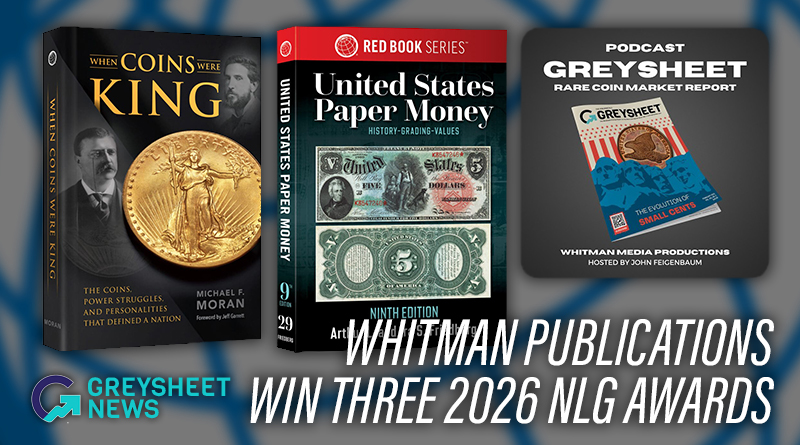
Whitman Brands walked away with a trio of honors during the annual Numismatic Literary Guild awards, held during the American Numismatic Association World's Fair of Money in Pittsburgh.

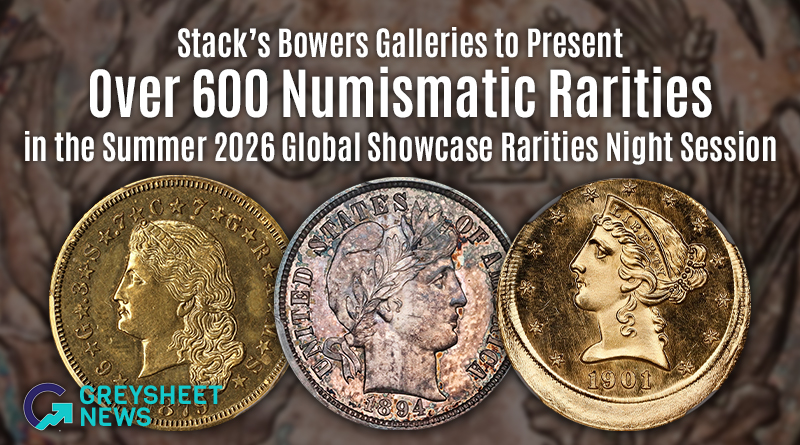
Rarities across the spectrum of American coinage are set to cross the auction block.
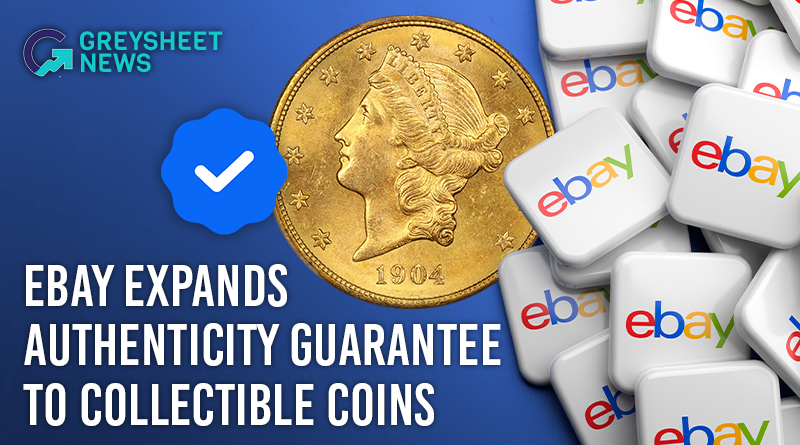
eBay, one of the world's largest marketplaces for unique and historic coins, today announced the expansion of Authenticity Guarantee in the U.S. to a new category: collectible coins.
Events
View All Events

Heritage Auctions

Wednesday, July 1, 2026
Thursday, July 2, 2026

DAVID LAWRENCE RARE COINS
Sunday, July 5, 2026