




 Whitman Expo



Outside of the direct trading of coins, our industry has seen some shake up recently on the data and information front.
Thank you to our sponsors!
Go check them out!









Struck sometime in late 1832 or early 1833 and on through the middle of 1834, the Kagin-1 is popularly collected because of its status as the first gold dollar struck in the United States. The dies are different from earlier Bechtler issues, with a neat, serrated border, allowing more room for the legends. Like the early beaded border issues, the K-1 dollar is struck to the pre-August 1834, U.S. standard: 30-grains of 20-carat gold to the dollar. The relatively high survival rate of the Kagin-1 gold dollar suggests that Bechtler’s new, convenient denomination met with wide acceptance. It is the only Bechtler conforming to the pre-1834 U.S. standard that is generally available, with approximately 150 pieces extant. Grades vary from VF-BU, with three or four choice mint state examples vying for finest known status. A single plain edge example (Kagin-1a) is known from a late state of the dies.
Obverse Description
30.G * RUTHERF: C.BECHTLER.
Reverse Description
ONE N:CAROLINA GOLD DOLLAR.
Catalog Information
GSID:
375980
Designer:
Christopher Bechtler, Sr.
Obverse Designer:
Christopher Bechtler, Sr.
Obverse Lettering:
30.G * RUTHERF: C.BECHTLER.
Reverse Designer:
Christopher Bechtler, Sr.
Reverse Lettering:
ONE N:CAROLINA GOLD DOLLAR.
Strike Type:
Business
Coin Shape:
Round
Edge:
Reeded
Variety:
C. Bechtler
Variety 2:
30 GR, Plain Edge, K-1a
Coin Date:
(1832-34)
Denomination:
G$1
Designation:
MS
Mint Location:
Carolina
Mintage:
unique
Coinage Type:
Private & Pioneer Gold
Coinage Years:
1831-1842
Composition:
Gold
Rarity:
Unique
Send Catalog Feedback
To: editor@greysheet.com
Subject: I would like to contribute catalog info to CDN for (1832-34) G$1 C. Bechtler, 30 GR, Plain Edge, K-1a MS
Body: Referring page: http://beta.greysheet.com/prices/item/c-bechtler-g1-plain-edge-30-gr-kagin-1-territorial-gold-coinage/gsid/375980 GSID: 375980 Title: (1832-34) G$1 C. Bechtler, 30 GR, Plain Edge, K-1a MS
Subscribe to View
View more data, info, and visualizations. Get access to retail and wholesale pricing as well as auction data.
Pricing Data Not Yet Available
We are constantly adding to our pricing database and prioritize user requests. Click below to request pricing for this item.
Request Pricing(1832-34) G$1 C. Bechtler, 30 GR, Reeded Edge, K-1 MS

Worth: $4,400 – $43,200
(1834) G$1 C. Bechtler, 28 GR, High, Reeded Edge, K-2 MS

Worth: $6,500 – $25,000
(1834) G$1 C. Bechtler, 28 GR, High, Plain Edge, K-2a MS
(1835-37) G$1 C. Bechtler, 28 GR, Center, Reeded Edge, K-3 MS

Worth: $4,250 – $25,000
(1835-37) G$1 C. Bechtler, 28 GR, Center, Plain Edge, K-3a MS
(1837-42) G$1 C. Bechtler, N Reversed, K-4 MS

Worth: $3,000 – $33,600
(1831) G$2 1/2 C. Bechtler, No 75 GR, Finely Beaded Reverse, K-5 MS

Worth: $26,000 – $126,000
(1831) G$2 1/2 C. Bechtler, No 75 GR, Coarse Beads, K-6 MS

Worth: $50,000 – $180,000
(1831) G$2 1/2 C. Bechtler, CAROLINA, K-7 MS

(1832) G$2 1/2 C. Bechtler, 75 GR, Beaded Border, K-8 MS

Worth: $32,500 – $150,000
(1832-34) G$2 1/2 C. Bechtler, 75 GR, with Star, K-9 MS

Worth: $80,000 – $96,000
(1837-42) G$2 1/2 C. Bechtler, 67 GR, 21C, K-10 MS

Worth: $7,500 – $66,000
(1835-37) G$2 1/2 C. Bechtler, 64 GR, 22C, Uneven, K-11 MS

Worth: $8,500 – $44,000
(1837-42) G$2 1/2 C. Bechtler, 64 GR, 22C, Even, K-12 MS

Worth: $6,800 – $80,000
(1834-42) G$2 1/2 C. Bechtler, 70 GR, 20C, K-13 MS

Worth: $7,500 – $72,000
Greysheet News
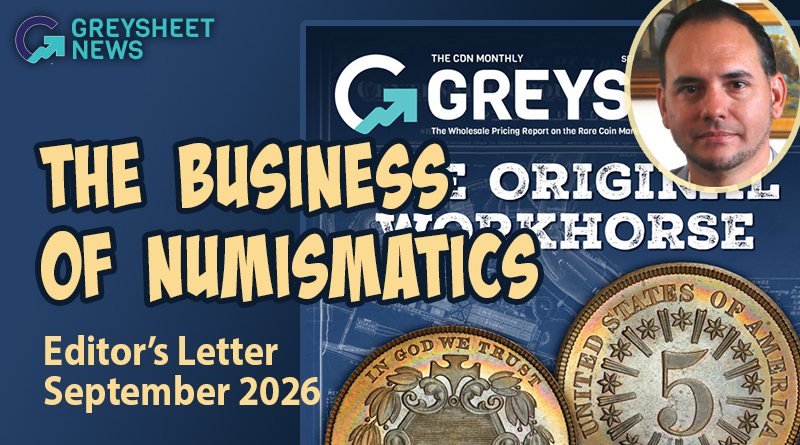
The Business of Numismatics: September 2026 Greysheet Editor's Letter
9/7/2026
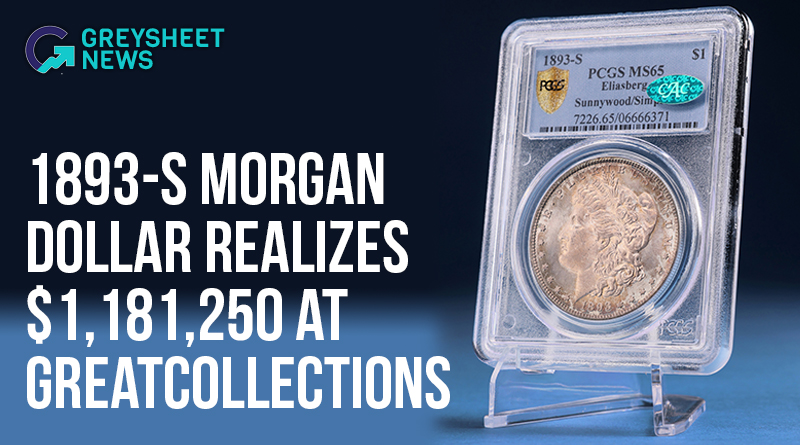
1893-S Morgan Dollar Realizes $1,181,250 at GreatCollections
Brings More Than 50% Over PCGS Price Guide — a Record for the Date in Gem Mint State.
9/4/2026
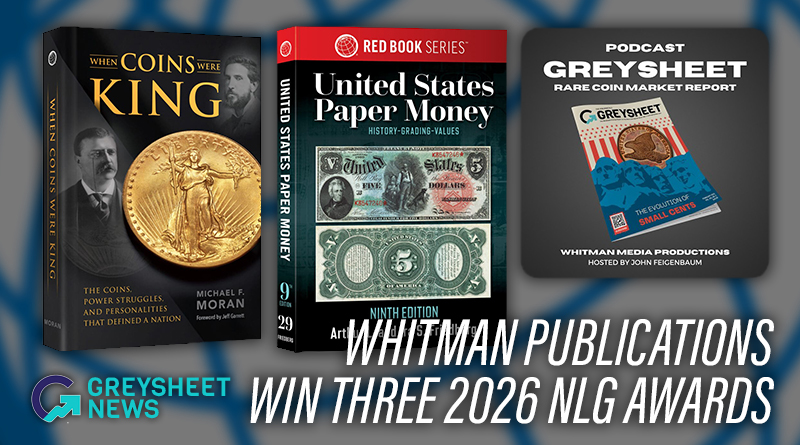
Whitman Publications Win Three 2026 NLG Awards
Whitman Brands walked away with a trio of honors during the annual Numismatic Literary Guild awards, held during the American Numismatic Association World's Fair of Money in Pittsburgh.
8/31/2026
Events
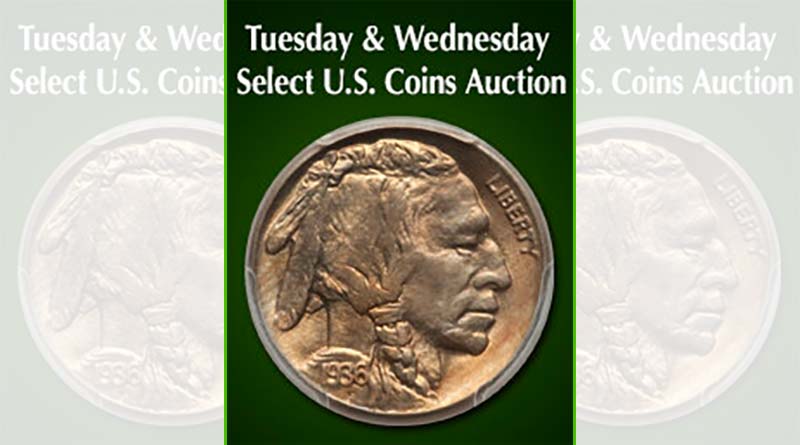
Heritage Auctions: US Coins Tuesday & Wednesday Select Auction
Location: Heritage Auctions
Wednesday, July 1, 2026
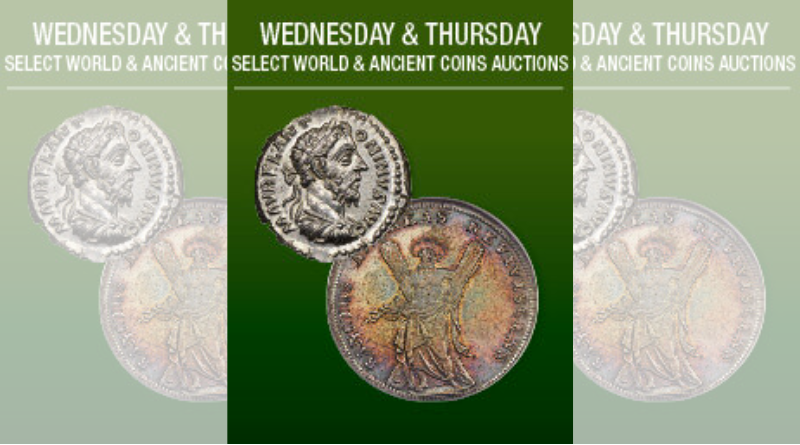
Heritage Auctions: World & Ancient Coins Wednesday & Thursday Select Auction
Location: Heritage Auctions
Thursday, July 2, 2026