




 Whitman Expo



The United States Mint marked the nation's Semiquincentennial on July 4 with a special striking.
Thank you to our sponsors!
Go check them out!










By 1939, the cent and the nickel were in a race to see which coin was most popular with collectors. It is hard to imagine a time when the Jefferson nickel was a source of excitement, yet this type remained fairly scarce in circulation until 1940. The nation’s depression-wracked economy slowed the release of new coins, and Jeffersons were still a rare novelty in 1939. This undoubtedly led to the strong sales of Proof nickels for this date.
The 1939 Proof nickel is of interest to variety collectors, as it comes with two distinctive reverses. The original Jefferson nickel reverse of 1938 featured wavy and somewhat incomplete steps on Jefferson’s home, Monticello. The Mint’s engraving staff sharpened these steps sometime during 1939 by preparing an entirely new master hub, and both varieties may be found for Proofs and circulation pieces alike. Proofs having the sharpened steps, a variety known as the Reverse of 1940, are noticeably scarcer than those with the earlier reverse, and command a premium price.
Proofs of this date having some cameo contrast are rare, yet they seem to exist for all five denominations. This is more likely to be found on the silver issues, as the greater natural brilliance of silver provides for more noticeable contrast.
Source: Whitman
Catalog Information
GSID:
10901
Fineness:
0.9
Precious Metal Weight:
0.6148 oz
Strike Type:
Proof
Edge:
Reeded
Variety:
Proof Set
Variety 2:
Reverse of 1938 Nickel, 5 Coins
Coin Date:
1939
Denomination:
1c-50c
Designation:
PR
Mint Location:
Philadelphia
Mintage:
8,795
Coinage Type:
Proof Set
Coinage Years:
1936-
Composition:
Silver
PCGS #:
904753
Send Catalog Feedback
To: editor@greysheet.com
Subject: I would like to contribute catalog info to CDN for 1939 1c-50c Proof Set, Reverse of 1938 Nickel, 5 Coins PR
Body: Referring page: http://beta.greysheet.com/prices/item/1939-united-states-proof-set-reverse-1938-nickel/gsid/10901 GSID: 10901 Title: 1939 1c-50c Proof Set, Reverse of 1938 Nickel, 5 Coins PR
Subscribe to View
View more data, info, and visualizations. Get access to retail and wholesale pricing as well as auction data.
Coin Value History
1939 1c-50c Proof Set, Reverse of 1938 Nickel, 5 Coins PR
Currency
Grade Range
Sort by
Pricing
Values
Greysheet & CPG® Values
1936 1c-50c Proof Set, Brilliant Finish, 5 Coins PR

Worth: $5,600 – $5,600
1936 1c-50c Proof Set, Satin Finish, 5 Coins PR

Worth: $5,200 – $5,200
1937 1c-50c Proof Set, 5 Coins PR

Worth: $2,365 – $2,365
1938 1c-50c Proof Set, 5 Coins PR

Worth: $980 – $980
1939 1c-50c Proof Set, Reverse of 1940 Nickel, 5 Coins PR

1940 1c-50c Proof Set, Reverse of 1940 Nickel, 5 Coins PR

Worth: $770 – $770
1940 1c-50c Proof Set, Reverse of 1938 Nickel, 5 Coins PR
1941 1c-50c Proof Set, 5 Coins PR

Worth: $735 – $735
1942 1c-50c Proof Set, 5 Coins PR

Worth: $700 – $700
1942 1c-50c Proof Set, 6 Coins PR

Worth: $800 – $800
1950 1c-50c Proof Set, 5 Coins PR

Worth: $625 – $625
1951 1c-50c Proof Set, 5 Coins PR

Worth: $500 – $500
1952 1c-50c Proof Set, 5 Coins PR

Worth: $235 – $235
1953 1c-50c Proof Set, 5 Coins PR

Worth: $195 – $195
1954 1c-50c Proof Set, 5 Coins PR

Worth: $110 – $110
1939 Proof Set 1c-50c PCGS Proof 64-66

$1,625
1939 Proof Set PCGS/CAC PR 66-67

$1,775
Five-Piece 1939 Proof Set PR64 to PR66 NGC. The coins are individually housed in holders from the same grading submission. T... (Total: 5 coins)

$900
Mixed Date Proof Coins PR67 to PR67+ PCGS. The five-coin lot includes: 1939 Cent PR67 Red; 1938 Quarter PR67, CAC; 1942 Qu... (Total: 5 coins)

$3,840
Five-Piece 1939 Proof Set PR63 to PR65 PCGS. The coins are individually housed in holders bearing consecutive certification ... (Total: 5 coins)

$720
1939 Proof Set PCGS/CAC Proof 65-66 (5 Coins)

$1,300
Five-Piece 1939 Proof Set PR65 to PR66 PCGS. The coins are separately housed in holders bearing consecutive certification nu... (Total: 5 coins)

$1,020
Five-Piece 1939 Proof Set PR64 to PR66 NGC. The coins are individually housed in holders from the same grading submission. T... (Total: 5 coins)

$1,020
Five-Piece 1939 Proof Set PR65 to PR67 PCGS. An exceptionally high grade set. The coins are individually housed in holders b... (Total: 5 coins)

$1,140
1939 Proof Set PCGS/CAC Proof 65-67 (5 Coins)

$1,700
Five-Piece 1939 Proof Set PR64 to PR66 NGC. The coins are individually housed in holders from the same grading submission. T... (Total: 5 coins)

$780
Five-Piece 1939 Proof Set PR65 PCGS. The coins are individually housed in holders bearing consecutive certification numbers.... (Total: 5 coins)

$1,440
1939 1c-50c Proof Set: PCGS/CAC PR65-66 (5 Coins)

$1,600
Five-Piece 1939 Proof Set PR64 to PR66 PCGS. The coins are separately encapsulated. The set includes: Cent PR64 Red; Rever... (Total: 5 coins)

$900
Five-Piece 1939 Proof Set PR64 to PR66 PCGS. The coins are separately housed in holders bearing consecutive certification nu... (Total: 5 coins)

$780
Five-Piece 1939 Proof Set PR64 to PR65 PCGS. The coins are individually housed in holders bearing consecutive certification ... (Total: 5 coins)

$780
1939 Proof Set PCGS/CAC Proof 64-66 (5 Coins)

$1,200
Five-Piece 1939 Proof Set PR64 to PR66 NGC. The coins are individually housed in holders from the same grading submission. T... (Total: 5 coins)

$930

$1,450
1939 Proof Set 1c -- 50c PCGS Proof 65-67 (5 coins)

$1,725
Greysheet News
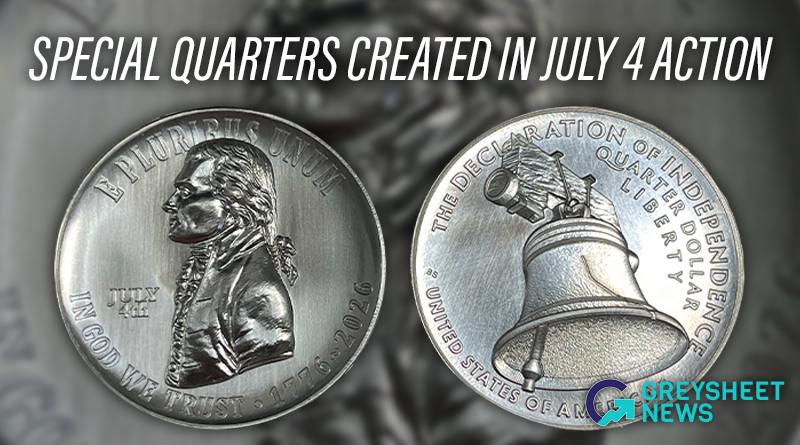
Special Quarters Created in July 4 Action
9/8/2026
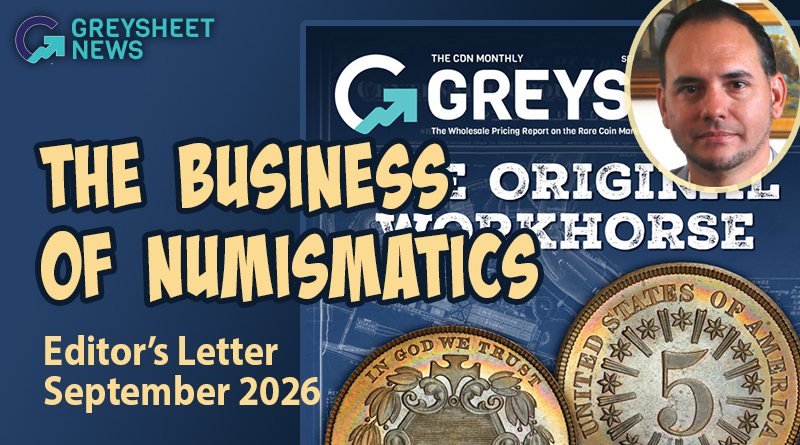
The Business of Numismatics: September 2026 Greysheet Editor's Letter
Outside of the direct trading of coins, our industry has seen some shake up recently on the data and information front.
9/7/2026
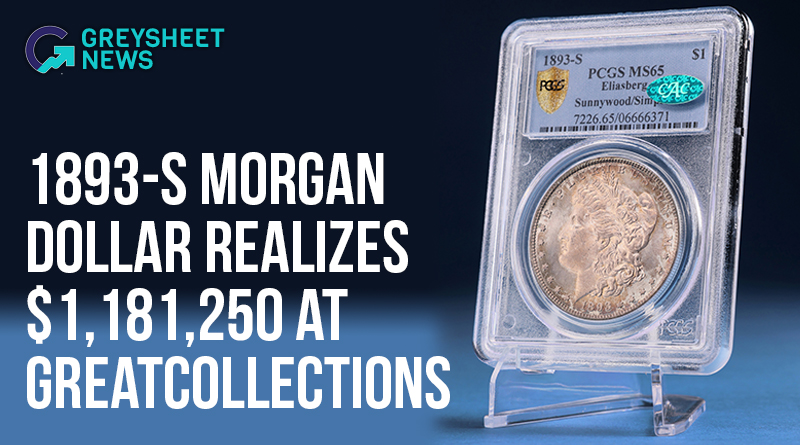
1893-S Morgan Dollar Realizes $1,181,250 at GreatCollections
Brings More Than 50% Over PCGS Price Guide — a Record for the Date in Gem Mint State.
9/4/2026
Events
Heritage Auctions: US Coins Tuesday & Wednesday Select Auction
Location: Heritage Auctions
Wednesday, July 1, 2026
Heritage Auctions: World & Ancient Coins Wednesday & Thursday Select Auction
Location: Heritage Auctions
Thursday, July 2, 2026