




 Whitman Expo
-
New Jersey: St. Patrick (1670s) Values
Greysheet & Red Book® PRICE GUIDE

Sort by
Sponsor

Sponsor

Sponsor

Sponsor

Sponsor

Legal Disclaimer
The prices listed in our database are intended to be used as an indication only. Users are strongly encouraged to seek multiple sources of pricing before making a final determination of value. CDN Publishing is not responsible for typographical or database-related errors. Your use of this site indicates full acceptance of these terms.
The Greysheet Catalog (GSID) of the New Jersey: St. Patrick (1670s) series of Colonial & Post-Colonial Issues in the U.S. Coins contains 6 distinct entries with CPG® values between $150.00 and $55,000.00.
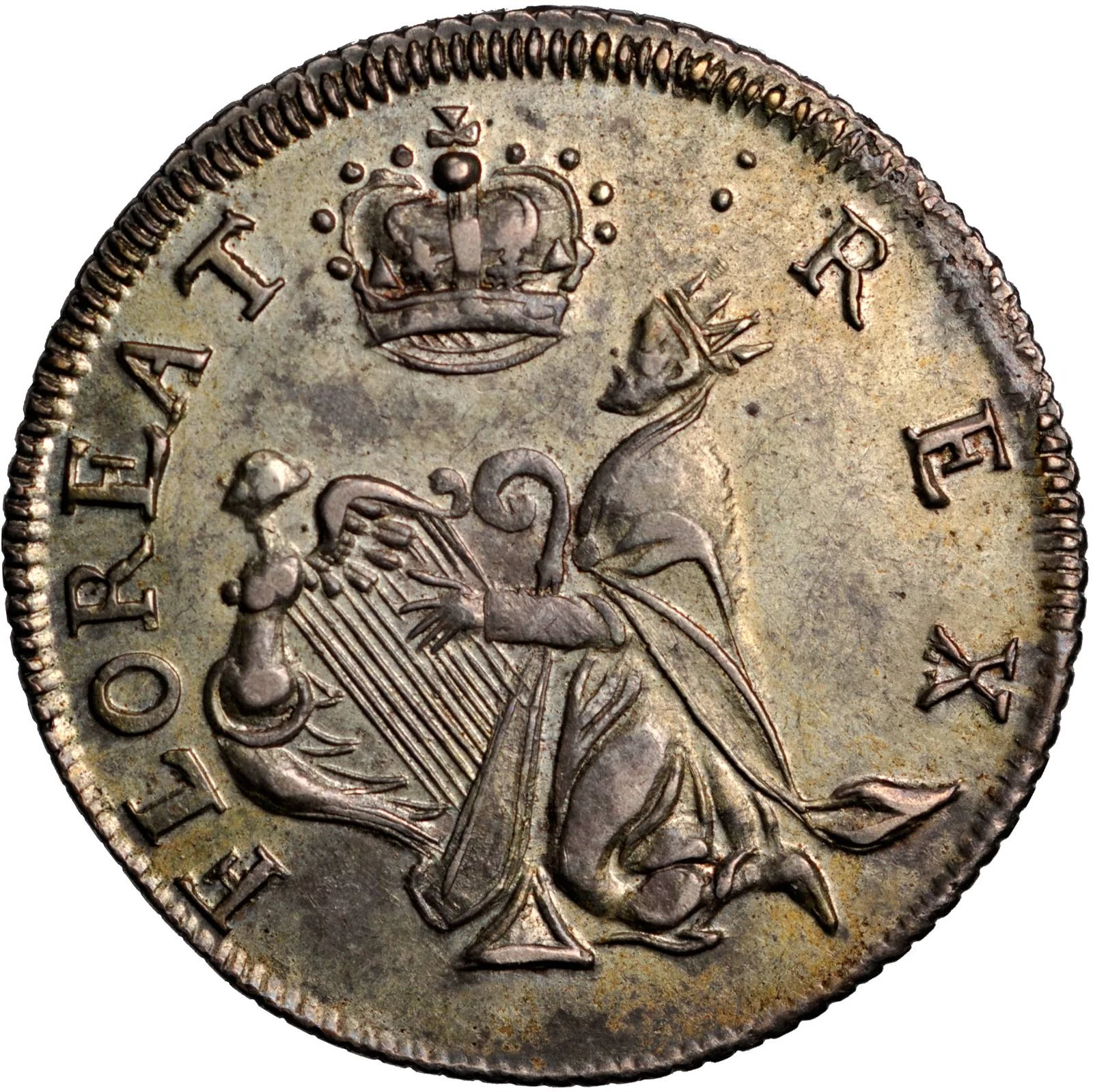
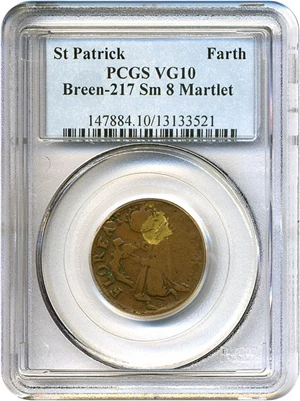
Mark Newby, who came to America from Dublin, Ireland, in November 1681, brought copper pieces believed by numismatists to have been struck in Dublin circa 1663 to 1672. These are called St. Patrick coppers. The coinage was made legal tender by the General Assembly of New Jersey in May 1682. The legislature did not specify which size piece could circulate, only that the coin was to be worth a halfpenny in trade. Some numismatists believe the largersize coin was intended. However, as many more farthing-size pieces are known than halfpennies, most believe that the smaller-size piece was meant. Copper coins often circulated in the colonies at twice what they would have been worth in England. The obverses show a crowned king kneeling and playing a harp. The legend FLOREAT REX ("May the King Prosper") is separated by a crown. The reverse side of the halfpence shows St. Patrick with a crozier in his left hand and a trefoil in his right, and surrounded by people. At his left side is a shield. The legend is ECCE GREX ("Behold the Flock"). The farthing reverse shows St. Patrick driving away serpents and a dragon as he holds a metropolitan cross in his left hand. The legend reads QUIESCAT PLEBS ("May the People Be at Ease"). The large-size piece, called by collectors a halfpenny, bears the arms of the City of Dublin on the shield on the reverse; the smaller-size piece, called a farthing, does not. Both denominations have a reeded edge. The decorative brass insert found on the coinage, usually over the crown on the obverse, was put there to make counterfeiting more difficult. On some pieces this decoration has been removed or does not show. Numerous die variations exist.
See More See Less




 Loading more ...
Legal Disclaimer
The prices listed in our database are intended to be used as an indication only. Users are strongly encouraged to seek multiple sources of pricing before making a final determination of value. CDN Publishing is not responsible for typographical or database-related errors. Your use of this site indicates full acceptance of these terms.
Available on Greysheet Marketplace
View All

Buy Now: $750.00

Buy Now: $3,300.00

Buy Now: $1,750.00

Buy Now: $4,950.00
Dealer Directory
View All Dealers

Stack’s Bowers Galleries
FEATURED

Merrill Coins
FEATURED

Greysheet News
View All News
Outside of the direct trading of coins, our industry has seen some shake up recently on the data and information front.

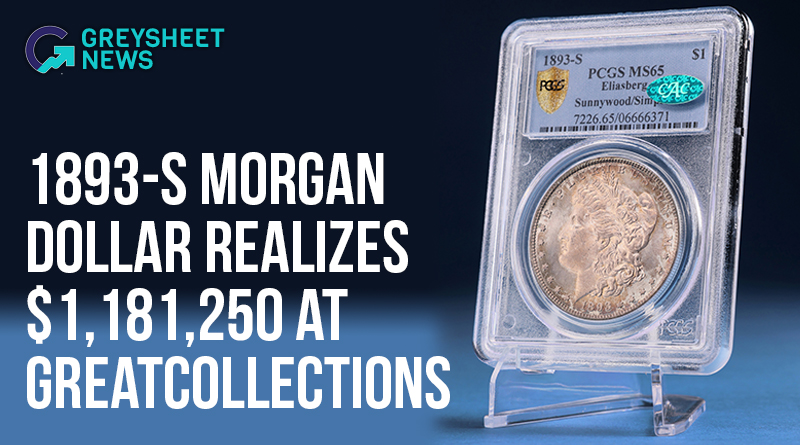
Brings More Than 50% Over PCGS Price Guide — a Record for the Date in Gem Mint State.
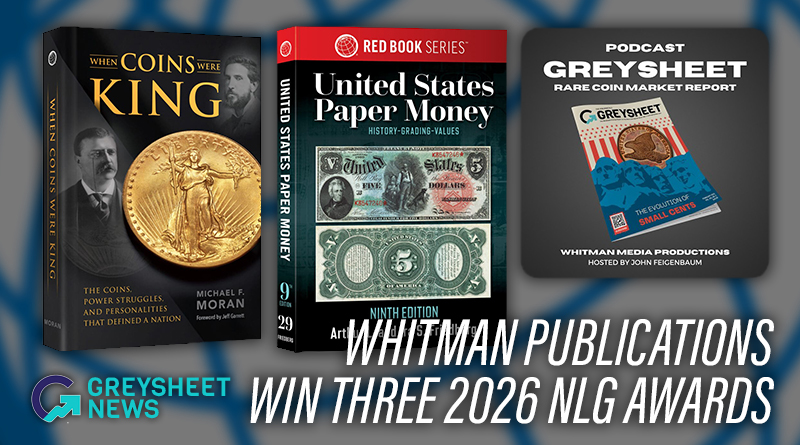
Whitman Brands walked away with a trio of honors during the annual Numismatic Literary Guild awards, held during the American Numismatic Association World's Fair of Money in Pittsburgh.
Events
View All Events
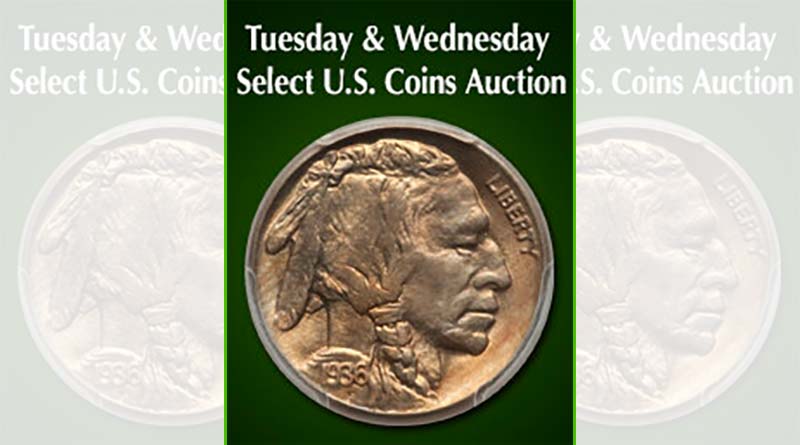

Heritage Auctions

Wednesday, July 1, 2026
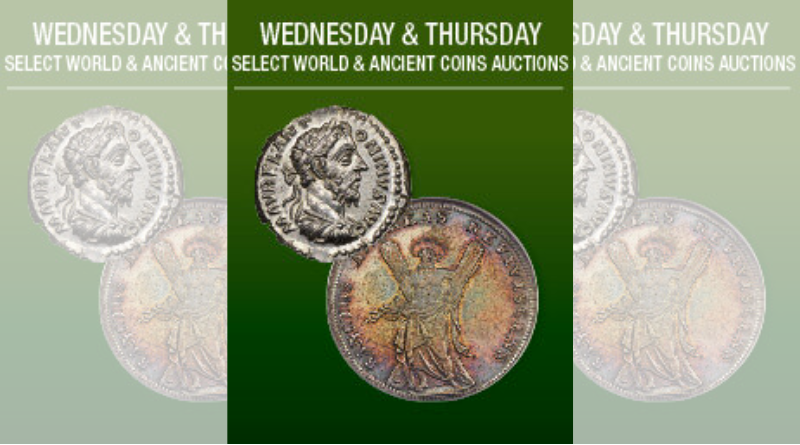
Thursday, July 2, 2026
DAVID LAWRENCE RARE COINS
Sunday, July 5, 2026