




 Whitman Expo


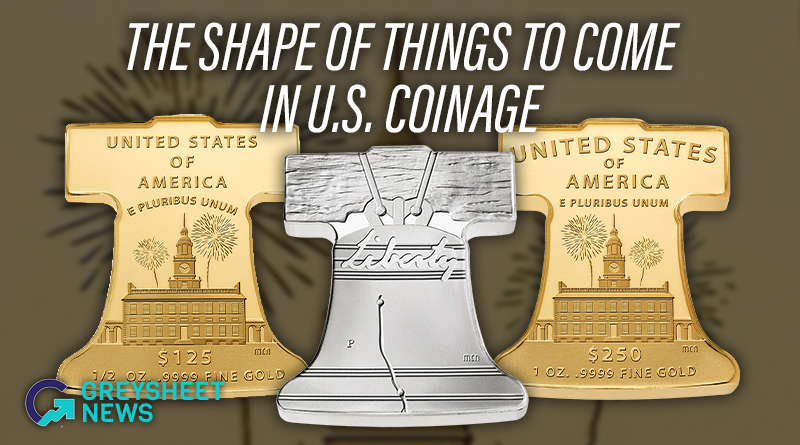
The U.S. Mint is planning to release the first U.S. coinage and medal of a shape other than round.
Image Coming Soon
We're working on adding images for this item.
Thank you to our sponsors!
Go check them out!









From the Stack's Bowers Auction catalog offering these coins for the first time:
It is a universal human experience to gaze up at the night sky and wonder what lies beyond the stars. For a few brief days in July 1999, these historic 22 Karat gold Sacagawea dollars flew among those stars-traveling nearly 2 million miles in orbit-and have returned to tell the tale. With only seven available for private ownership, these coins have been ranked #5 among the Top 100 Modern Coins (according to PCGS), and their very existence has become the stuff of numismatic legend.
Like all of humankind's greatest treasures, these coins deliver a compelling combination of rarity, historic significance, and mystery. They were originally struck to promote the new Sacagawea dollar coin and to commemorate the first space shuttle flight to be commanded by a woman, USAF Col. (ret.) Eileen Collins. These solid-gold rarities embody the achievements of these two pioneering women including the first transcontinental visit to the Pacific and the first woman to steer America into space.
Philip N. Diehl, former Director of the United States Mint, said at the time that "Commander Collins is carrying on the tradition of women trailblazers, and we can't imagine a better way to honor Sacagawea's legacy."
Since returning from orbit, they have been securely held at the Fort Knox Bullion Depository for nearly three decades, further adding to their mystique. The only other coin held by the United States Government in Fort Knox which was later made available for sale went on to become the most valuable coin in the world-the Farouk 1933 Saint Gaudens $20 that sold for $7.59 million in our July 2002 auction.
As part of an initial mintage of 39 pieces produced in 22 Karat gold, these space flown coins were struck in a Proof finish on specially prepared 1/2 ounce gold planchets originally intended for the American Eagle bullion coin series. Despite the "W" mintmark for West Point, some evidence points to the fact that the coins were struck at the Philadelphia Mint in order to meet the accelerated timeline for getting the coins abroad the Shuttle mission.
As the very first incarnation of the new Sacagawea design, these are considered to be pattern or prototype coins and have been assigned the pattern variety Judd-2190. They are the only collectible gold patterns struck after the 19th century, and even the most elite collectors in this category never envisioned a time when they would be available for private ownership-until now.
They were struck with the prototype "engraved tailfeathers" reverse design which is shared with the coveted "Cheerios" variety of Sacagawea dollar. This special reverse design was used on only the very first coins struck in the series and was quickly modified to a less detailed design shortly after production for circulation began.
Furthermore, they are the only Federally-issued U.S. coins to be struck exclusively for spaceflight. While other coins have traveled into space-including the famous "space penny" 1793 Wreath Cent Stack's Bowers Galleries sold for $82,250 in May 2015-no others were produced specifically with orbit in mind.
Not since 1922 had the U.S. Mint struck a one dollar coin in gold, and not since 1889 had it issued this composition for circulation. Several generations of collectors were born, collected, and died without ever having the chance to acquire a new dollar coin struck in gold. And no one has ever had the chance to acquire a U.S. Mint coin struck specifically for spaceflight.
Much like the 1804 Draped Bust silver dollars, these coins were specially produced in small numbers as a symbol of American ideals and accomplishment, and bear a date that does not match the actual year of their production.
Much like the 1933 Saint-Gaudens $20, the majority of these coins were melted; those that survived were eventually safeguarded in Fort Knox.
The 1913 Liberty Head nickels offer the greatest similarity to these pieces in their rarity-only five known-their razor-sharp Proof finish, and their transitional status bridging two different design types.
These space flown 22 Karat gold dollars are the most modern entry into this canon, but their youth should not preclude their recognition as true American treasures. They celebrate some of the most crucial elements that have enabled our country's success: trailblazing explorers, space-age technology, and gold. If one were to select a single coin to own that embodies America's greatness, this would be it.
When one of the original 39 gold examples-a non space flown coin-was displayed at a private congressional dinner on August 5, 1999, the numismatic press indicated 7- it was estimated at "approximately $1 million." Had this been one of the coins returned from orbit, we wonder how many times higher that estimate would have been.
Only the 12 best strikes in 22 Karat gold were selected for flight aboard Space Shuttle Columbia, and the remaining 27 Sacagawea coins were destroyed. Of the dozen survivors, only these seven will be available for public ownership. The United States Mint has confirmed that the remaining five coins will be archived in their heritage collection and other public institutions and permanently out of reach for collectors. Each of the coins in this auction will also be accompanied by a Certificate of Authenticity and Monetization featuring the signature of Acting Mint Director Kristie McNally.
These pieces, which until now have never been issued as coinage, will only become monetized as legal tender upon their sale. The final auction price for each coin will include $1 to account for the face value of the newly monetized coin. The same monetization requirement was applied to the Farouk 1933 Saint-Gaudens $20 double eagle as part of our 2002 auction, resulting in an exact selling price of $7,590,020. Much like that offering, this sale is sure to be a landmark event across several categories- offering world-class treasures for the most elite collectors of numismatics, aviation, space flight, and the most historic American artifacts.
Source: Stack's Bowers
Catalog Information
GSID:
394001
Fineness:
0.999
Strike Type:
Proof
Coin Shape:
Round
Edge:
Plain
Variety:
Sacagawea, Space Flown, Gold
Variety 2:
J-2190
Coin Date:
2000-W
Denomination:
P$1
Designation:
PR
Mint Location:
West Point
Mint Mark:
W
Mintage:
12
Coinage Type:
Pattern
Coinage Years:
2000
Composition:
Gold
Rarity:
L7
PCGS #:
508062
Send Catalog Feedback
To: editor@greysheet.com
Subject: I would like to contribute catalog info to CDN for 2000-W P$1 Sacagawea, Space Flown, Gold, J-2190 PR DCAM
Body: Referring page: http://beta.greysheet.com/prices/item/2000-proof-pattern-space-flown-gold-sacagawea-dollar-judd-2190/gsid/394001 GSID: 394001 Title: 2000-W P$1 Sacagawea, Space Flown, Gold, J-2190 PR DCAM
Subscribe to View
View more data, info, and visualizations. Get access to retail and wholesale pricing as well as auction data.
Pricing Data Not Yet Available
We are constantly adding to our pricing database and prioritize user requests. Click below to request pricing for this item.
Request PricingGreysheet News
The Shape of Things to Come in U.S. Coinage
8/12/2026

Greysheet Offers Former Numismaster Subscribers 3 Months Free Subscription
Numismaster.com ceased operations on July 31, leaving paid digital subscribers scrambling to pursue other options for their numismatic information.
8/10/2026
Special Quarters Headed for Circulation
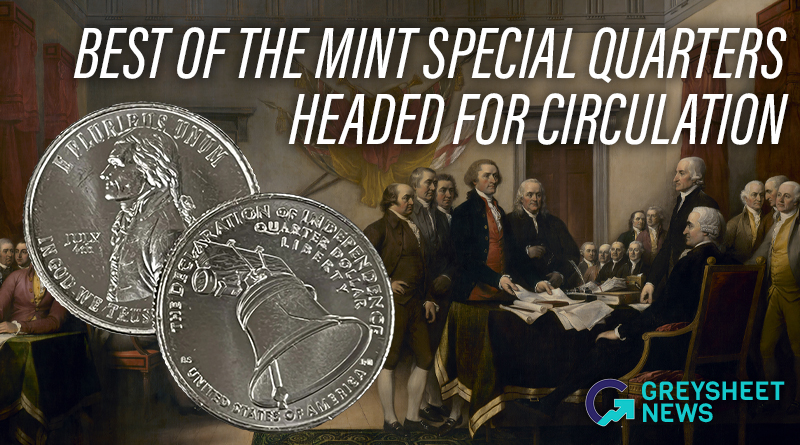
The search is on for special quarter dollars that will be placed in circulation by the United States Mint as part of the nation's Semiquincentennial celebration.
8/10/2026
Events
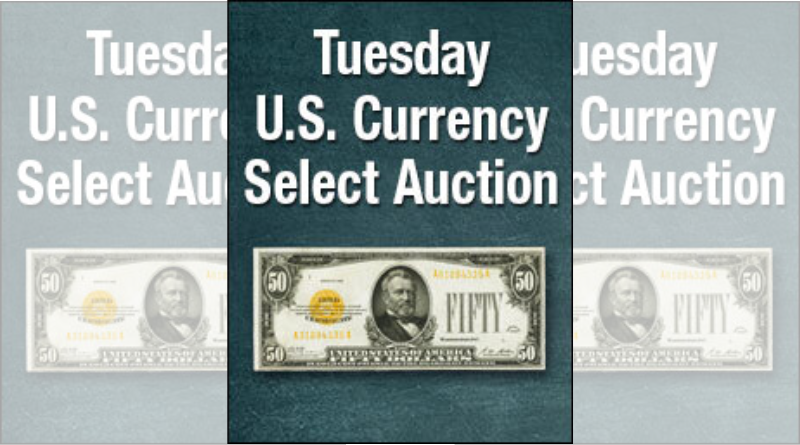
Heritage Auctions: US Currency Tuesday Select Auction
Location: Heritage Auctions
Tuesday, June 2, 2026
Heritage Auctions: World Paper Money Tuesday Select Auction
Location: Heritage Auctions
Tuesday, June 2, 2026
Heritage Auctions: US Coins Tuesday & Wednesday Select Auction
Location: Heritage Auctions
Wednesday, June 3, 2026