



 Whitman Expo



Outside of the direct trading of coins, our industry has seen some shake up recently on the data and information front.
Thank you to our sponsors!
Go check them out!








Year of striking not known, but attributed to 1850. Two silver strikes known. A gilt copper piece is in the Harry W. Bass, Jr. Collection.
Obverse Description
Regular double eagle die by Longacre, but without a date.
Reverse Description
Regular-issue die.
Catalog Information
GSID:
197947
Strike Type:
Proof
Coin Shape:
Round
Edge:
Reeded
Variety:
Gilt Copper
Variety 2:
J-126
Coin Date:
(1850)
Denomination:
DT$20
Designation:
PR
Mint Location:
Philadelphia
Mintage:
Unique
Coinage Type:
Pattern
Coinage Years:
1850
Composition:
Gilt Copper
Rarity:
unique
PCGS #:
908543
Send Catalog Feedback
To: editor@greysheet.com
Subject: I would like to contribute catalog info to CDN for (1850) DT$20 Gilt Copper, J-126 PR
Body: Referring page: http://beta.greysheet.com/prices/item/1850-die-trial-gilt-twenty-dollars-judd-126/gsid/197947 GSID: 197947 Title: (1850) DT$20 Gilt Copper, J-126 PR
Subscribe to View
View more data, info, and visualizations. Get access to retail and wholesale pricing as well as auction data.
Coin Value History
(1850) DT$20 Gilt Copper, J-126 PR
Currency
Grade Range
Grading Authority
Sort by
Pricing
Values
Greysheet & CPG® Values
1850 P1c Original, J-119 PR

Worth: $2,000 – $4,000
1850 P1c Restrike, Billon, J-120 PR

Worth: $1,800 – $5,500
1850 P1c Copper, J-121 PR BN

Worth: $5,000 – $7,800
1850 P1c Restrike, Copper, J-122 PR BN

Worth: $12,000 – $14,400
1850 P1c Restrike, Copper-Nickel, J-123 PR
1850 P1c Restrike, Copper-Nickel, J-124 PR

Worth: $2,000 – $5,000
1850 P1c White Metal, J-124a PR

Worth: $4,500 – $7,800
1850 P1c German Silver, J-124b PR
1850 P1c Nickel, J-124c PR

Worth: $3,600 – $7,800
1850 P1c Nickel, J-124d PR
1850 P1c Copper, J-124e PR BN
Worth: $16,000 – $21,600
1850 P1c Copper, J-124f PR BN
1850 P1c Nickel, J-124g PR

Worth: $3,400 – $6,600
1850 P1c Copper, J-124h PR BN

Worth: $6,600 – $7,920
1850 P3CS Original, Silver, J-125 PR

Worth: $1,500 – $8,400
Greysheet News
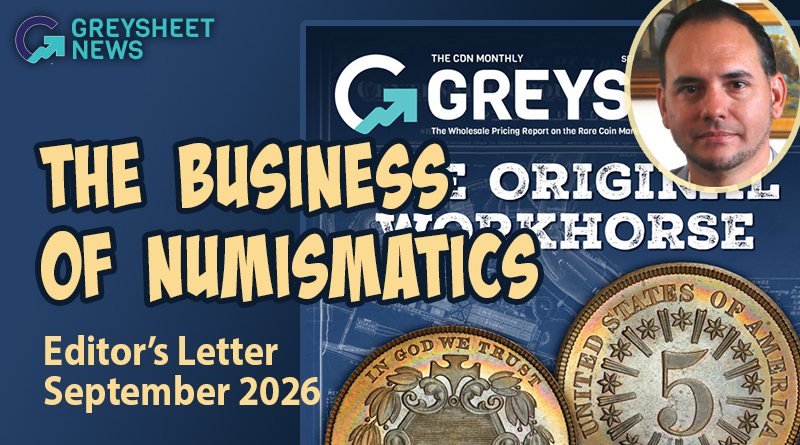
The Business of Numismatics: September 2026 Greysheet Editor's Letter
9/7/2026
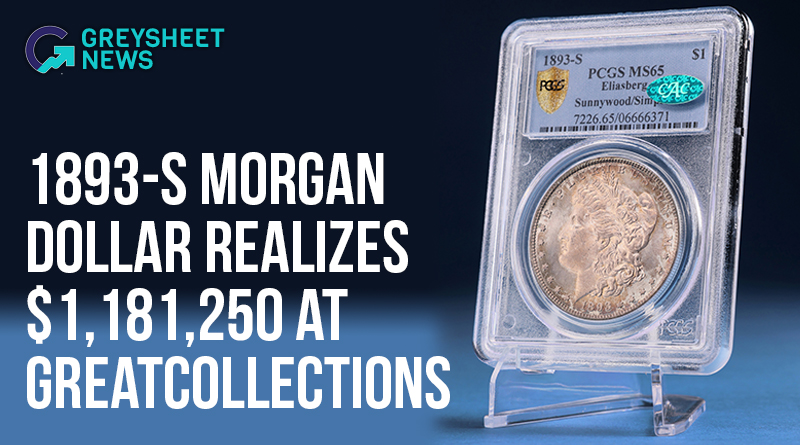
1893-S Morgan Dollar Realizes $1,181,250 at GreatCollections
Brings More Than 50% Over PCGS Price Guide — a Record for the Date in Gem Mint State.
9/4/2026
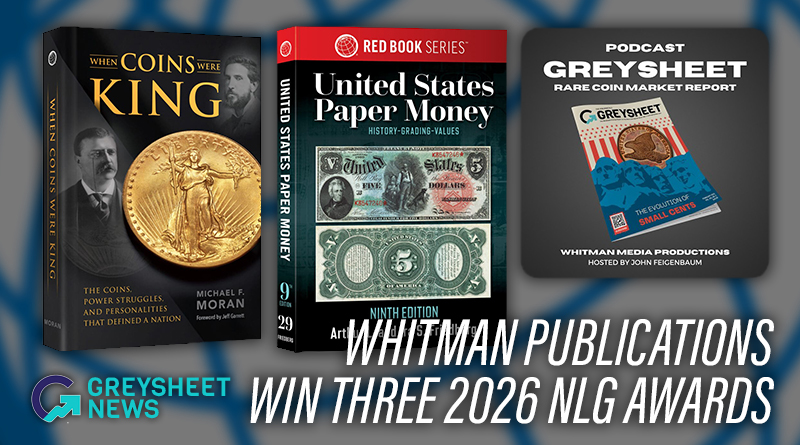
Whitman Publications Win Three 2026 NLG Awards
Whitman Brands walked away with a trio of honors during the annual Numismatic Literary Guild awards, held during the American Numismatic Association World's Fair of Money in Pittsburgh.
8/31/2026
Events
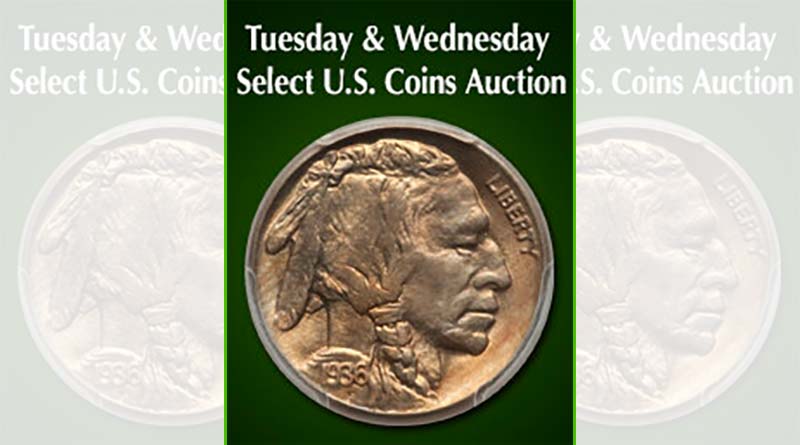
Heritage Auctions: US Coins Tuesday & Wednesday Select Auction
Location: Heritage Auctions
Wednesday, July 1, 2026
Heritage Auctions: World & Ancient Coins Wednesday & Thursday Select Auction
Location: Heritage Auctions
Thursday, July 2, 2026