




 Whitman Expo
America's First Nickel: Workhorse of Everyday Life
If you decide to put together a collection of shield nickels, none of these circulation dates are prohibitively rare.
by Michael Garofalo |
Published on September 9, 2026

Download the Greysheet app for access to pricing, news, events and your subscriptions.
Subscribe to Greysheet for the industry's most respected pricing and to read more articles just like this.
When the Coinage Act of 1792 was approved by Congress, it mandated that a minting facility be built, defined the principal roles to be filled and defined the denominations of coins to be struck by the fledgling mint. One of those denominations would be the smallest silver coin initially struck—the half disme. Possibly 1,500 of these coins were struck in 1792 and they are a historic piece of American history.
Having a value of five cents, a different half dime design was struck in quantity in silver beginning in 1794 and the non-continuous production of these coins ended in 1873. But there was a span of eight years—1866 through 1873—where two different coins, one silver and the other nickel, each had five cents worth of buying power.
In the 1850s, the economy was strong and America was moving westward at a very fast pace. The intercontinental railroad was being built connecting the wilderness of the West with the civilized East. The discovery of gold in California inspired many Americans to seek their fame and fortune and move west. But darker clouds started to gather as the Supreme Court handed down the racially biased Dred Scott decision as well as ruling that the Missouri Compromise needed to be overturned as the court could not prohibit slavery in the United States.
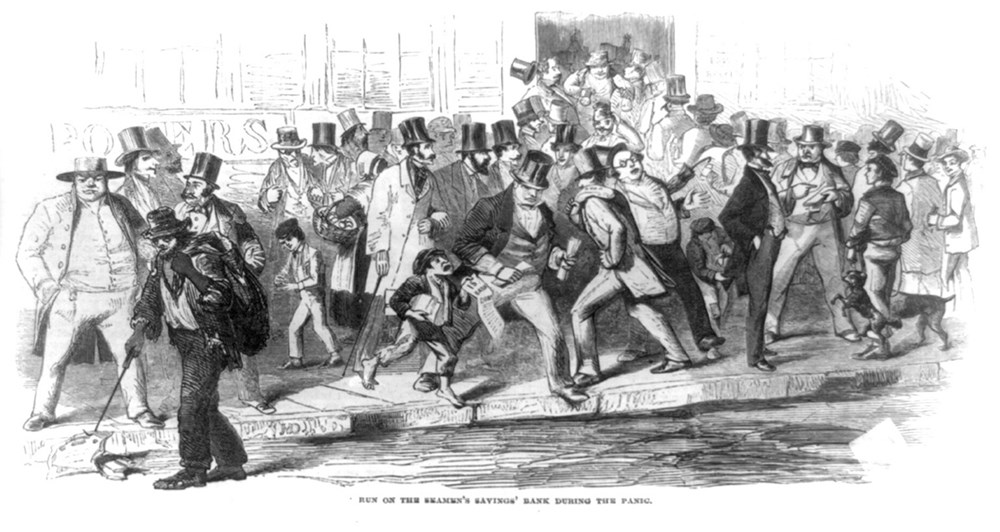
The eastern bankers also became much more cautious in accepting the paper currency issued by western banks. Speculation and overconfidence fed into what became the Panic of 1857. As anxiety and fear spread through the public, many people began withdrawing their money from the banks and asking for payment in gold and silver. Suddenly, banks became unstable and the stock market and insurance companies began a rapid decline and discovered a shortage of cash.
As we approached the start of the Civil War, all coins were being hoarded, especially those struck in silver or gold. Half dimes were the second smallest denomination of silver coinage, after the three-cent silver coin, and all silver and gold coins were quickly disappearing from circulation. After Abraham Lincoln won the presidency in November of 1860, the seeds of secession were planted and the fear of an actual civil war caused all coinage to be saved, including copper coins.
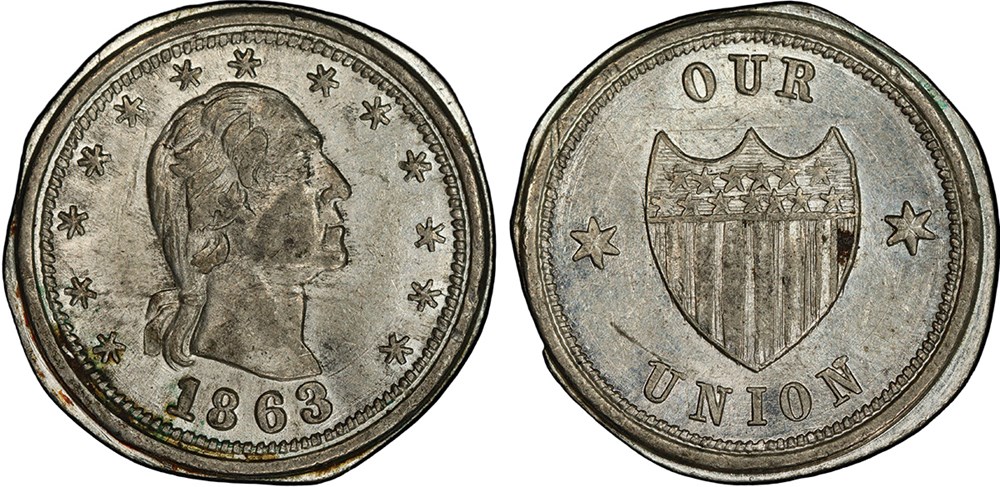
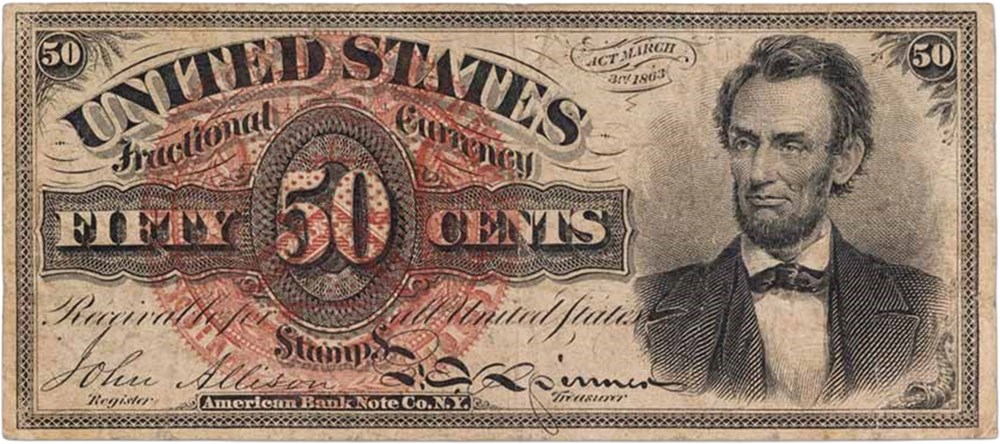
As the War Between the States began, even though the North had an overwhelming number of soldiers and munitions manufacturing, the South was more ably led on the battlefield so the outcome was uncertain. To help commerce transactions in the North, merchants created their own copper tokens to act as coinage. These copper "Civil War Tokens" filled the void while the government introduced small pieces of paper currency in low denominations. Beginning in August of 1862, the U.S. Government printed this "fractional currency" in denominations of three cents, five cents, ten cents, 15 cents, 25 cents, and 50 cents.
United States postage stamps were also used as small change but they were fragile and had a limited lifespan. In July of 1862, a law was passed that allowed postage stamps to be accepted as legal tender in payment of debts, up to a $5.00 amount. Inventor John Gault created a brass frame that fit over the postage stamp and had a window covered with clear mica to allow viewing the stamp inside. Gault’s invention was welcomed as stamps were too fragile for daily commerce. The brass frames also allowed merchants to buy them and advertise their businesses on this "coinage."
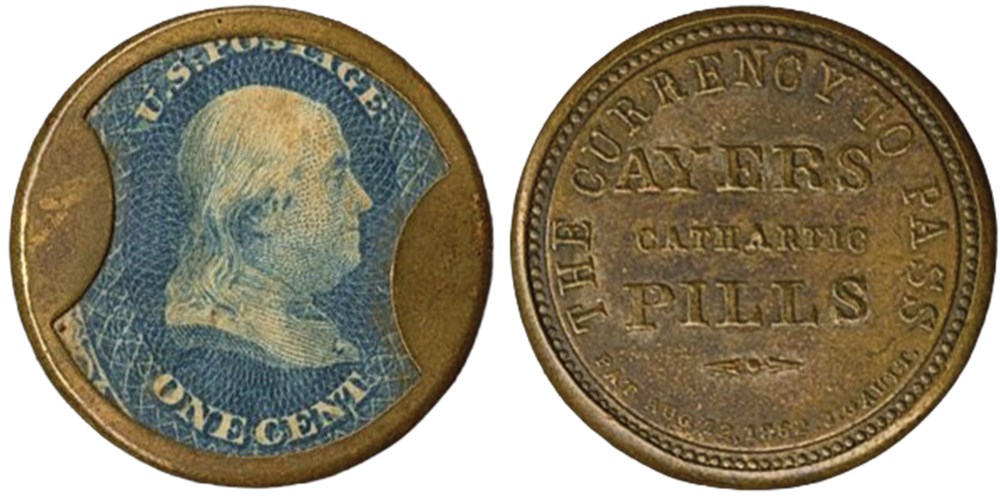
These substitutions—Civil War tokens, encased postage and fractional currency—all helped with the coin shortage, but it wasn’t until 1864, when the first two-cent copper coins were struck, and not until 1865 when the first three-cent nickel coins were struck. That helped to alleviate the pressure on coinage shortages, but the hoarding of all silver and gold coins did not stop completely.
Joseph Wharton was a Pennsylvania industrialist and a strong advocate for the use of the nickel metal in American coinage. He advocated the use of nickel as he owned more of it than anyone else in the United States. Wharton also had very influential friends in Congress who attempted to influence legislation to use nickel in the proposed two-cent coin. Since that was unsuccessful, these same people crafted and guided the legislation promoting nickel in the three-cent coins first struck in 1865. Mint Director James Pollock had previously been opposed to striking coins made of nickel, due to the hardness of the metal. The success of the three-cent coin in 1865 changed his mind.
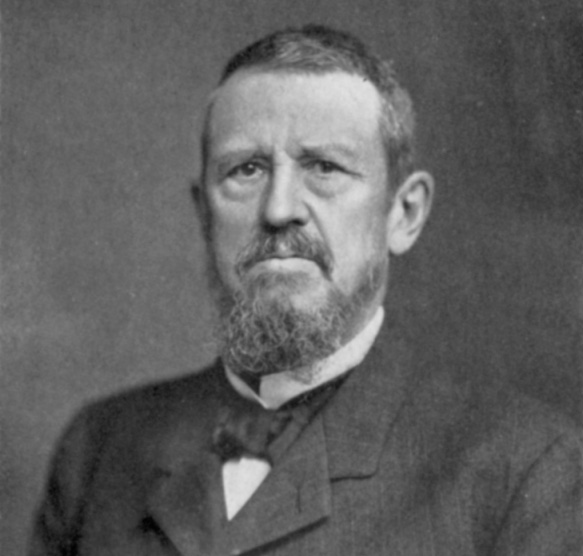
Pollock created legislation authorizing a five-cent coin of the same composition as the three-cent nickel. The legislation passed through Congress and quickly became law. This new nickel coin was legal tender in amounts up to one dollar but could not be exchanged for copper coins at most banks or the U.S. Mint. The Coinage Act of May 16, 1866 authorized that the new five-cent coin be comprised of 25% nickel and 75% copper.
It became the responsibility of James B. Longacre, Chief Engraver at the United States Mint, to create a suitable design. Longacre had developed patterns for this new nickel coin and the one garnering most favor was one that was similar to his successful two-cent piece design.
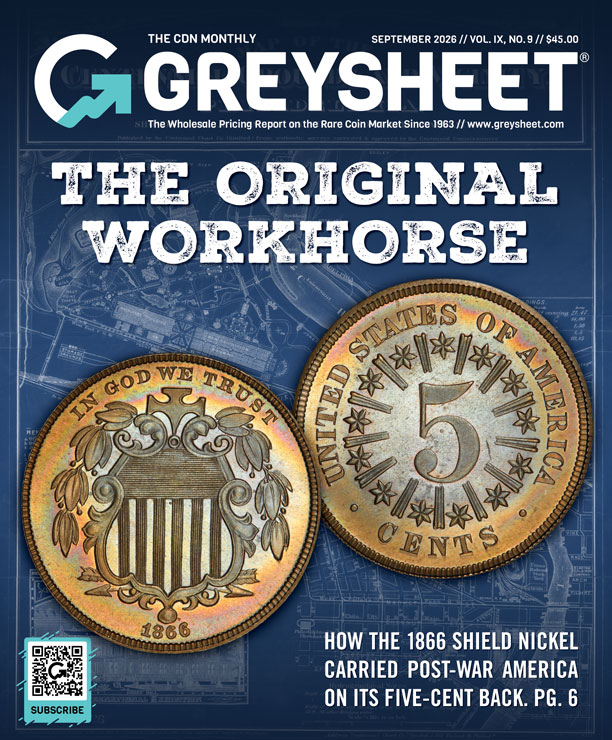
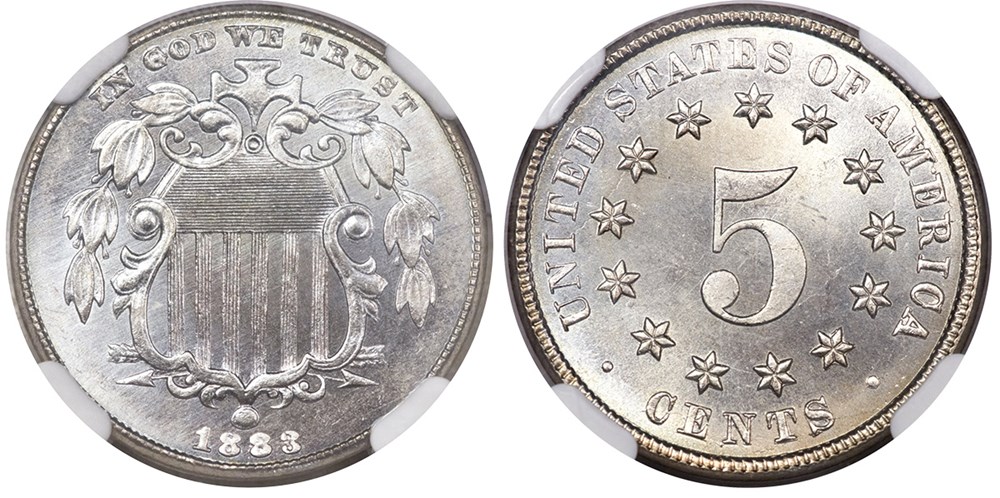
Both the two-cent piece and what would become the shield nickel share the "Union Shield" design, extremely popular and patriotic especially near the end of the Civil War. The shield nickel designs were modified to have the nation’s motto "IN GOD WE TRUST" placed in the field as opposed to being inscribed on a banner. On both coins, the date is centered on the lower periphery.
The reverse of the two-cent piece depicted the numeral "2" in the center of the reverse inside of a neatly tied wreath while the shield nickel displayed the numeral "5" in the center of the reverse surrounded by alternating six-pointed stars and ornamental rays between the stars.
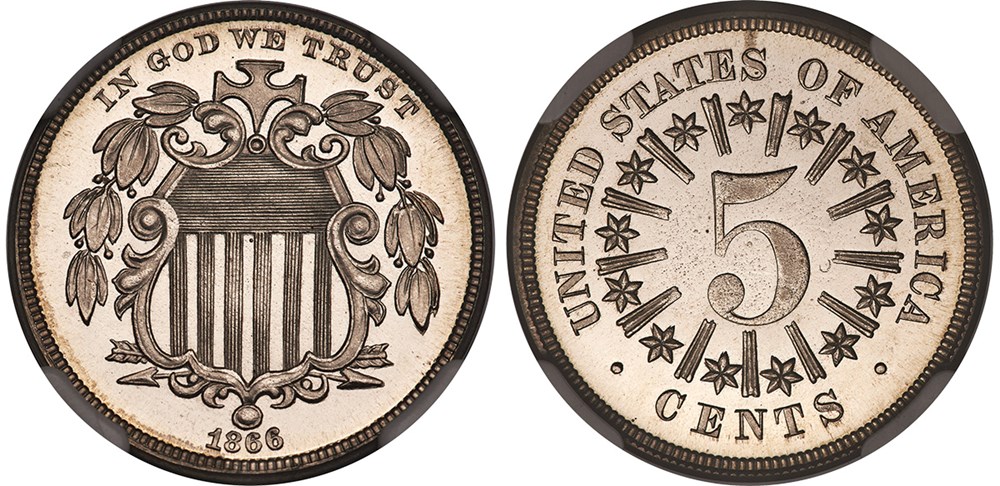
These new coins, due to their size and composition, proved difficult to strike. Beyond that difficulty, the design was roundly criticized, with the American Journal of Numismatics describing it as "the ugliest of all known coins". More than 14 million of these new five-cent nickels were struck in its inaugural year of 1866.
A year later, after more than 2 million 1867-dated shield nickels were again struck with rays on the reverse, production was halted and the rays were removed. This was done to make the striking of the stars stronger and more even. Over 28 million of the new 1867-dated shield nickels were struck without rays.
Rather than eliminating all problems, this caused even more confusion among the members of the public. There were 1867 shield nickels with rays and without rays. Was one of these coins a counterfeit or were they both genuine? The public was obviously confused and uncertain.
Due to the limited lifespan of these dies, the Mint toyed with the idea of striking these coins in aluminum, but the scarcity of that metal and the unreliability of the supply made it impossible to seriously consider.
Because of the hardness of the nickel, each date wound up having multiple collectible varieties. Doubled die obverses, doubled die reverses, repunched dates, clashed dies, misaligned dies, tripled die obverses, misplaced dates, missing leaves, narrow dates, wide dates, small dates, large dates, and even die chips are among the numerous varieties for collectors. Most collectors stick with the most popular varieties as opposed to collecting every die variety imaginable. Depending on which source that you rely on, there may be between 130 and up to nearly 200 minor varieties of shield nickels. Many of these were caused by the hardness of the metal and the haste with which the dies were altered, causing very minor differences in appearance and also in value.
By 1870, the mintage dropped from 28 million down to fewer than five million coins. The next year, only 561,000 coins struck as shield nickels sat in bags in the Treasury, while silver half dimes were still being hoarded. Between 1872 and 1876, between two and six million shield nickels were struck annually.
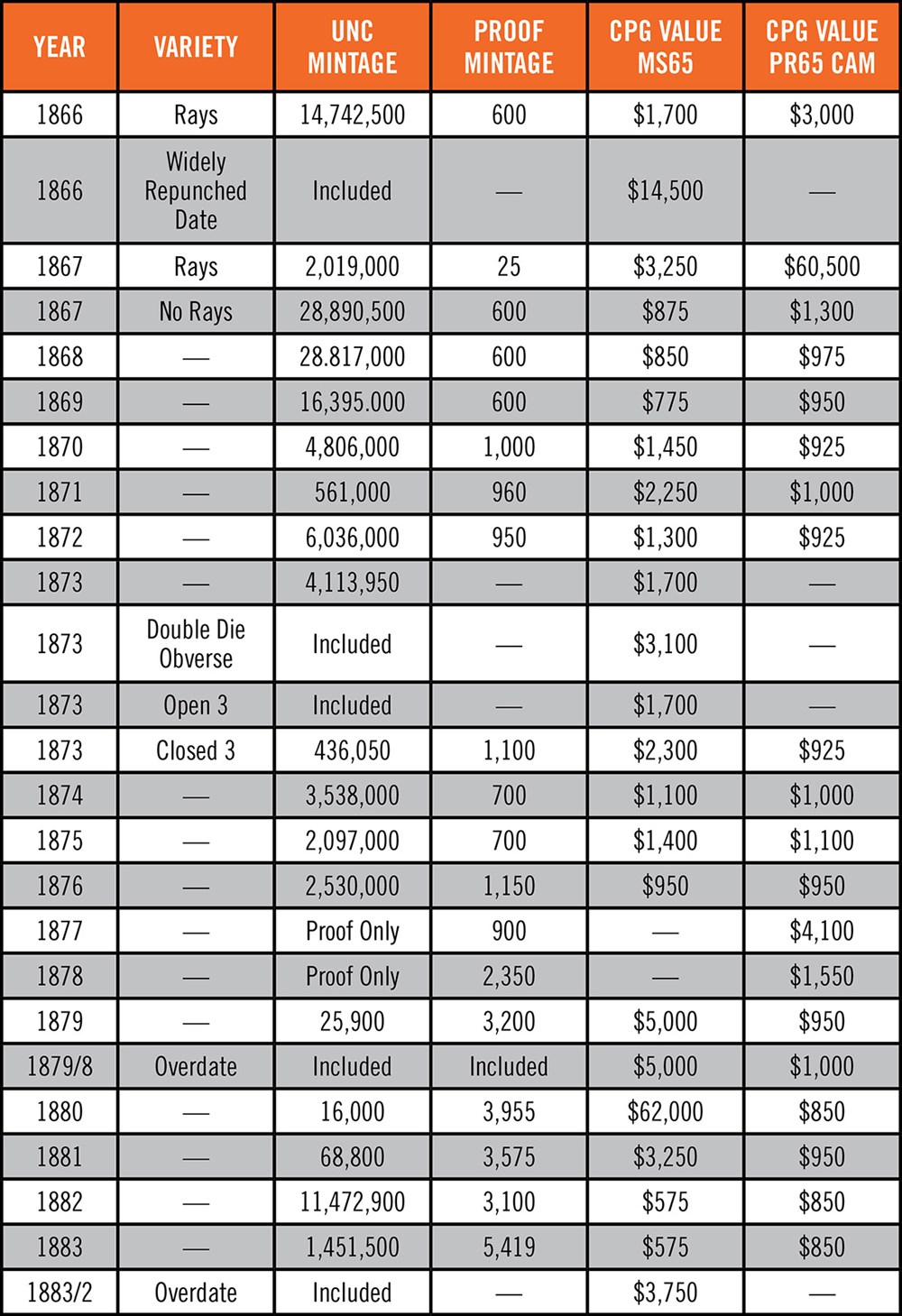
The year 1873 had both Open 3 and Closed 3 varieties, with the Open 3 having 4,113,950 struck while the Closed 3 had only 436,050 struck. The variety known as the Closed 3 was struck first. The numeral "3" in the date too closely resembled an "8". Because of that confusion, the Mint prepared new date punches, in which the arms of the 3 did not curl around toward the center. This created the second variety called the Open 3.
As part of the Act of 1873, the Director of the Mint gained the authority to lower the quantity or to suspend production of any coins, if they were not needed for commerce. In 1876, after 2.5 million shield nickels were struck, production was suspended for these circulating coins for 1877 and 1878. The only shield nickels struck during those years were Proof versions, intended for collectors. Only 900 Proof 1877 shield nickels and 2,350 1878 shield nickels were struck for collectors.
The Treasury had a large stock of nickels being stored in their vaults meaning reduced numbers of coins were struck between 1879 through 1881. The 1880-dated nickel had a minuscule mintage of only 16,000 pieces that were struck for circulation, making it the rarest date of the entire shield nickel series.
Once the 1882-dated coins were struck, those dies we repunched with the 1883 date, which caused a slightly visible "2" to be evident under the "3" creating the overdate 1883/2 variety.
If you decide to put together a collection of shield nickels, none of these circulation dates are prohibitively rare. The 1877 and 1878 dates are Proof only dates and can be difficult to find in certain grades. The 1880 date is one of the harder to find dates with only 16,000 struck. If you decide to obtain both circulation and Proof strikes, the 1867 with rays Proof can exceed $20,000. But with a reported mintage of only 25 coins, that price is not unexpected.
Although there are nearly 200 or more minor varieties, the major ones are the widely repunched date of 1866, the 1873 doubled die obverse, the Open 3 and Closed 3 varieties of 1873, the 1879/8 overdate and the 1883/2 overdate. But buy the coins that interest you!
Images courtesy of APMEX, Heritage Auctions, NGC, and Library of Congress.

Related Stories (powered by Greysheet News)
View all news
As dealers, collectors and investors all know, Morgan and Peace silver dollars are extremely popular American coins because of their history, legends, and silver content.

It is imperative that you research any Proof set before purchasing in order to determine the number of silver coins, the fineness, and the total weight of the silver content as they vary from year to year and from type of Proof set.
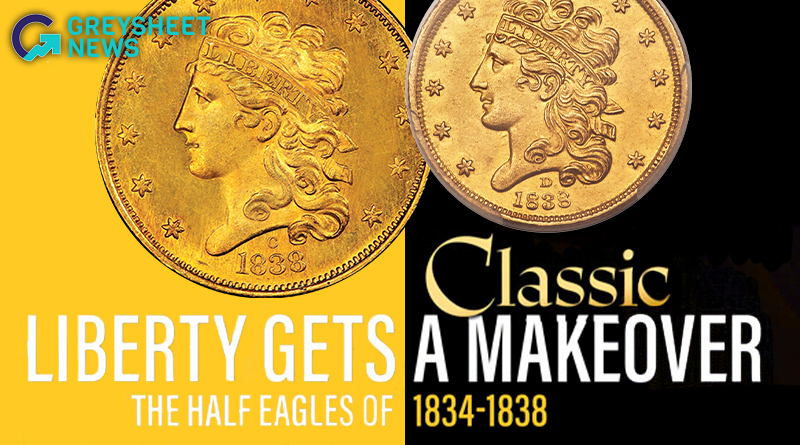
These coins were struck for five years—between 1834 and 1838—and they were struck every year at the Philadelphia Mint.
Please sign in or register to leave a comment.
Your identity will be restricted to first name/last initial, or a user ID you create.
Comment
Comments