




 Whitman Expo
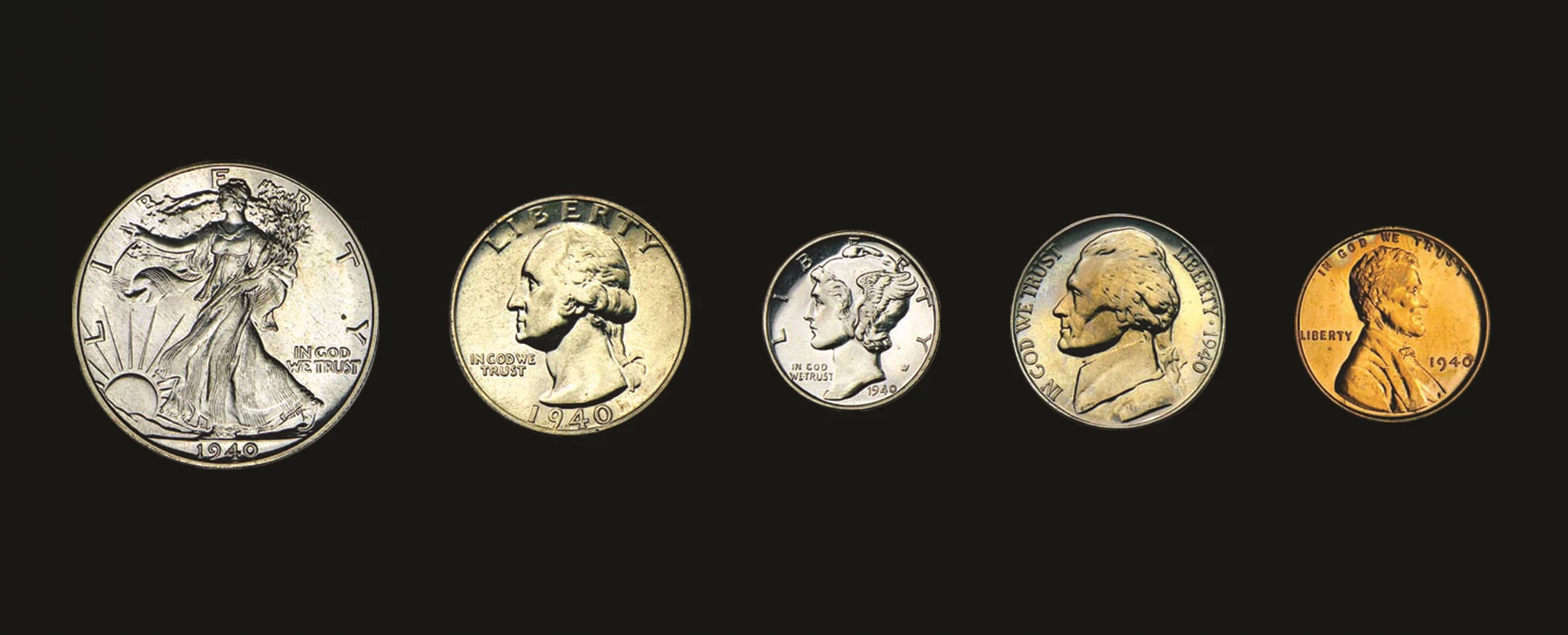
1940 1c-50c Proof Set, Reverse of 1940 Nickel, 5 Coins Original Government Packaging (OGP)


Greysheet & CPG® PRICE GUIDE
- U.S. Coins /
- Proof & Mint Sets /
- Proof Sets (1936–) /
- 1940 1c-50c Proof Set, Reverse of 1940 Nickel, 5 Coins /
- Original Government Packaging (OGP)
- Values
- U.S. Coins
- Proof & Mint Sets
- Proof Sets (1936–)
- 1940 1c-50c Proof Set, Reverse of 1940 Nickel, 5 Coins
- Original Government Packaging (OGP)


Collectors were keenly aware of the aftermarket price increases for the Proof sets of 1936, and sales of Proof coins in 1940 showed a notable increase from the year before. Prosperity was returning to the United States after a decade of economic depression, and this undoubtedly encouraged sales, too. Once again, the quarter dollar registered the lowest sales, though time has rendered these slight differences meaningless. Most of the 1936 to 1942 Proofs have long since been removed from their original envelopes, so their subsequent handling weighs more heavily on their survival rate than does the respective numbers coined. Like the nickels of 1939, those dated 1940 are transitional. The majority feature the sharper steps of Monticello introduced in 1939, yet a few were coined with dies that were impressed from the old hub having the wavy steps typical of 1938 nickels and most of the 1939 nickels. Collectors eagerly seek the 1938 Reverse nickel among the 1940 Proofs. The Mint’s achieving of a fully brilliant finish after 1936 often came at a price in terms of design detail. Its die polishing was very harsh, and this tended to soften some of the details rather than enhance them. In addition, the dies wore quickly, and this further eroded some details. Wear was evident as shallow flow lines radiating outward from the center of the die. These lines were transferred to the coins struck from such dies, a phenomenon that a later generation of Mint employees described as “starburst.” Instead of quickly retiring Proof dies as they became worn, Mint personnel repolished them to a full brilliance. This further eroded the details, and it even wiped out some shallow features altogether. An example is the lapel of Lincoln’s coat on the cent. Where it meets the coin’s field, this feature is in very low relief, and repeated polishing of the dies removed enough metal to diminish it significantly. Another example of overzealous polishing of the dies is seen on the Mercury dime, where the band that secures the rods of the fasces is left hanging at the bottom. Being a fairly shallow feature, one that is near the coin’s border, it was particularly vulnerable to abrasive polishing of the die. On this and other dates of Proof dimes, it may appear very thin or even partially obliterated.
See More See LessAbout CDN Prices
All CDN prices are based on proprietary market knowledge and technology developed by CDN Publishing, LLC.
CPG® prices represent retail levels. Collectors should refer to CPG values as a starting place for their negotiations, or auction bid reference.
Greysheet/Greensheet prices are wholesale market levels for collectible coins/paper money intended to indicate what a dealer, or wholesale, buyer would pay for the described item in the specified grade. Greysheet/Greensheet represent "sight-seen" values based on a buyer's in-hand review. The actual value can be more or less than this depending on factors including eye appeal and market timing.
Bluesheet (NGC & PCGS) prices represent the highest sight-unseen offers to buy on dealer networks like CDN Exchange. In many cases, there are no active sight-unseen buy offers, so CDN looks to the recent lowest market values for such an item. For this reason, Bluesheet values typically represent the floor of the market for the specified item. CDN only tracks Bluesheet on certain items.
CAC prices are for U.S. coins that meet the standards of the Certified Acceptance Corporation. You can learn more about CAC on their web site.
Price movement is indicated for price changes in the last 30 days.
The prices listed in our database are intended to be used as an indication only. Users are strongly encouraged to seek multiple sources of pricing before making a final determination of value. CDN Publishing is not responsible for typographical or database-related errors. Your use of this site indicates full acceptance of these terms.
Greysheet News
View All News
Outside of the direct trading of coins, our industry has seen some shake up recently on the data and information front.

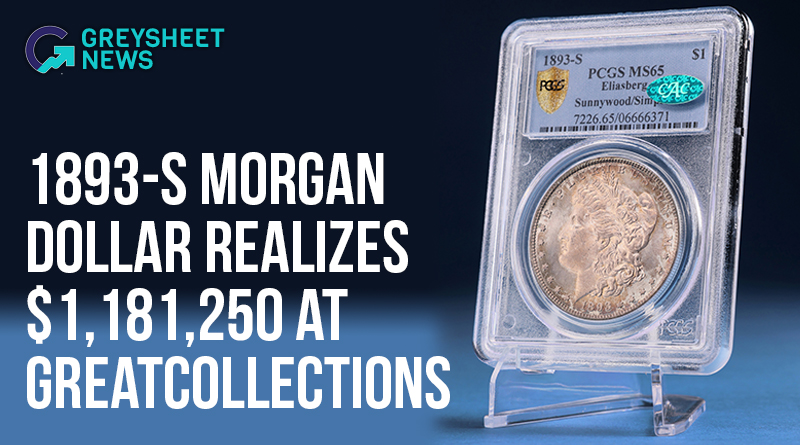
Brings More Than 50% Over PCGS Price Guide — a Record for the Date in Gem Mint State.
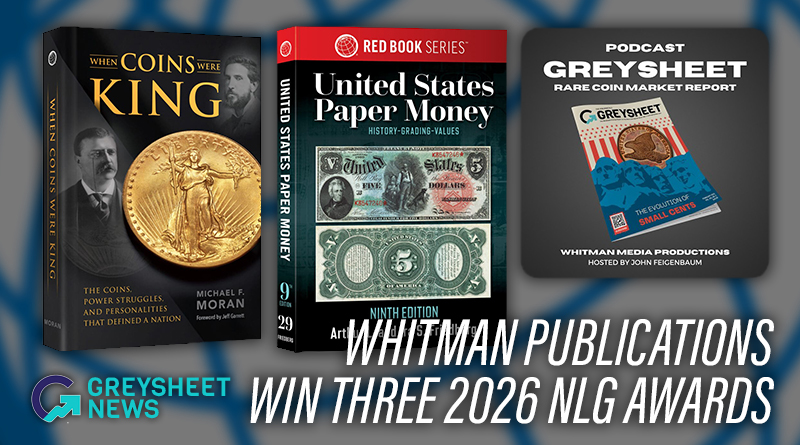
Whitman Brands walked away with a trio of honors during the annual Numismatic Literary Guild awards, held during the American Numismatic Association World's Fair of Money in Pittsburgh.