




 Whitman Expo
Netherlands: Third Silver Ducat Coin In Dutch City Gates Series Features Helpoort Gate In Maastricht
The Royal Dutch Mint have released the third silver proof ducat in their latest series featuring unique historical landmarks.
by Michael Alexander |
Published on August 20, 2024

Download the Greysheet app for access to pricing, news, events and your subscriptions.
Subscribe to RQ Red Book Quarterly for the industry's most respected pricing and to read more articles just like this.

The latest coin highlights the Helpoort Gate in Maastricht which is part of the city's original walls. Translated as Hell's Gate, it is Maastricht's only remaining city gate from medieval times and the Netherlands' oldest city gate still standing. At 14 metres or 46 feet tall, this familiar landmark was an integral part of the city's fortifications for about 200 years though it was Henry I, Duke of Brabant, who first authorised the gate's construction in the year 1229 comprising a significant part of the first, Medieval surroundings of Maastricht. The gate was used as defence and after second half of the 15th century, it was also used as an arsenal for gunpowder storage and later as a residence. The unusual name Helpoort is directly translated as ‘Hell gate’, which although it may not have a positive ring, it has been said that the street behind the gate was an early red light district and as such, being seen in the area was considered a great sin and would send the individual to hell.
The city gate was also known as Jekerpoort, named after the River Jeker, Hoogbruggepoort (High bridge Gate), De Twee Torens (Two Towers) to name a few and mainly due to the gate’s many functions over the centuries. Today, the gate’s function is that of a small museum that focuses on the fortification and city's history. Staffed mainly by volunteers, they offer historical facts of the structure and assist visitors who are able to climb the tower and enjoy the views from the 9th March to the 3rd November.
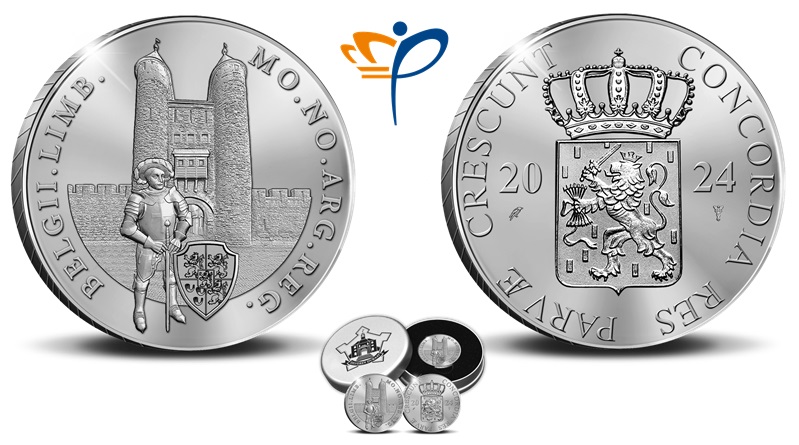
According to the Dutch Mint Act, a knight in armour is to be included in the design on the coin. For this series, Karel van Egmond (1467 – 1538) is depicted and has place of honour. This armored man on the obverse was an important duke of several areas in the Netherlands. His reign was threatened by the superior authority of the Emperor Charles V and as such he is remembered as having been the last independent feudal ruler of the Netherlands. The obverse of the Helpoort Silver Ducat depicts Duke Karel van Egmond in front of the landmark Gate. The provincial crest of Limburg is depicted on his shield. The Latin abbreviation inscription surrounding the primary design reads MO.NO.ARG.REG.BELGII.LIMB and in full is Moneta Nova Argenta Regni Belgii which translates as ‘New Silver coin of the Kingdom of the Netherlands’. LIMB denotes the province of Limburg. On the reverse of the Silver Ducat, the crowned national coat of arms of the Netherlands is centred. On either side are the numerals 20 and 24 denoting the year of issue along with the Dutch Mint’s mintmark and privy mark. The inscription surrounding the crest reads CONCORDIA RES PARVAE CRESCUNT (Unity makes Strength).
| Denomination | Metal | Weight | Diameter | Quality | Mintage Limit |
| Ducat | .873 Silver | 28.2 g. | 40 mm. | Proof | 1,750 |
Available from the 15th August, the coin is encapsulated and presented in a new reduced size pressed-metal round two-piece case accompanied with a certificate of authenticity. For additional information, please visit the Royal Dutch Mint’s online webshop.
As the Netherlands are part of the Euro-zone since 2002, Silver ducats remain recognised by the Dutch State as a means of legal payment. The frequency of release will be three Silver Proof ducats a year. The first coin in the series is dated 2023 and was the only one released in that year.
Related Stories (powered by Greysheet News)
View all news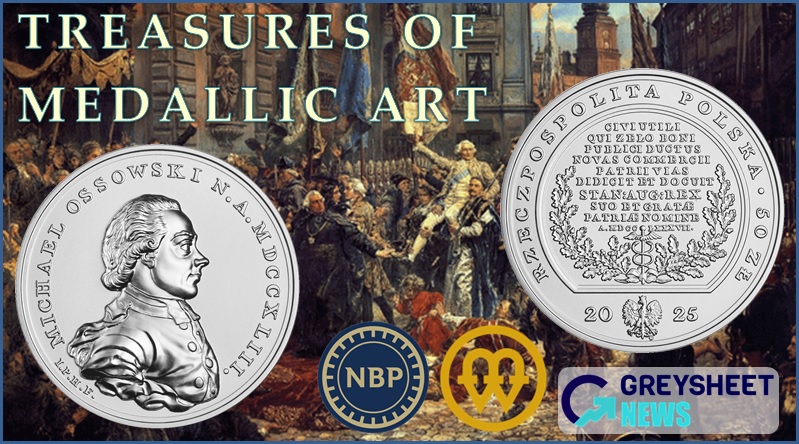
The National Bank of Poland release the second coins as part of the art of medallic excellence series.

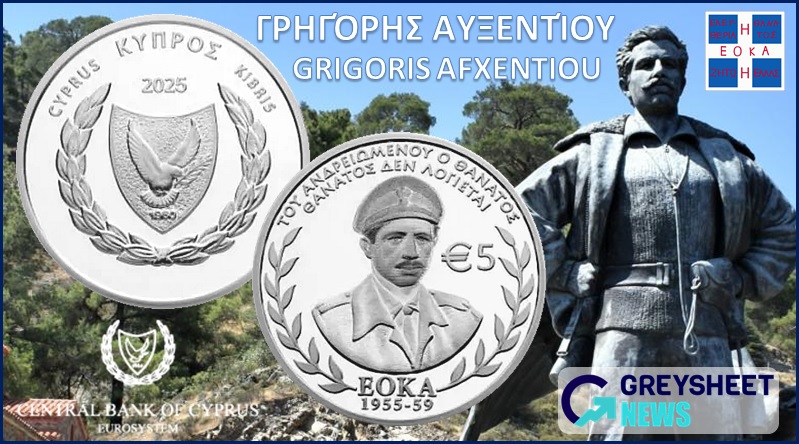
The Central Bank of Cyprus release their latest silver collector coins honouring a national hero.
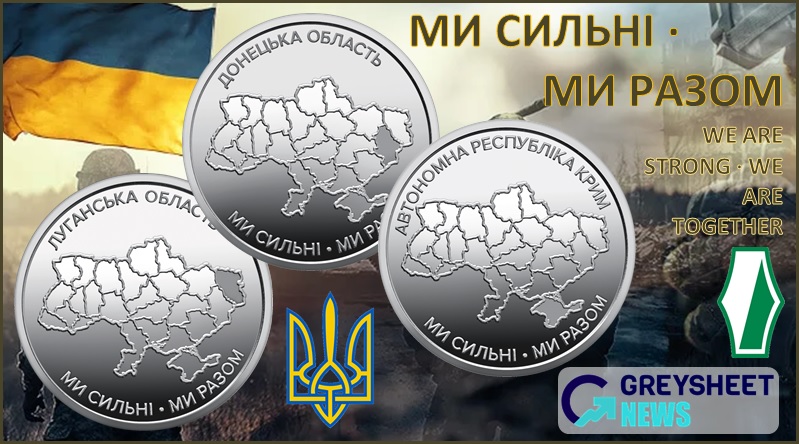
The National Bank of Ukraine introduce a new circulation-type collector coin series.
Please sign in or register to leave a comment.
Your identity will be restricted to first name/last initial, or a user ID you create.
Comment